
 Ithil
Water & Wastewater Operations
Drinking water: C−. Stormwater: D. Wastewater: D+. Unchanged since 2021.
ASCE Report Card, 2025
Compliance built into daily operations
EPA estimates
The pressure is real
Utility data is siloed across spreadsheets, lab systems, SCADA, ERP platforms, permit trackers and EHS software. A single utility can manage over
About a third of the water workforce is eligible for retirement in the next decade. The Safe Drinking Water Act and the Clean Water Act set the same deadlines regardless of staffing, and the new PFAS standards push compliance dates out to 2031 at a cost districts are already struggling to fund.
The district's day on one screen
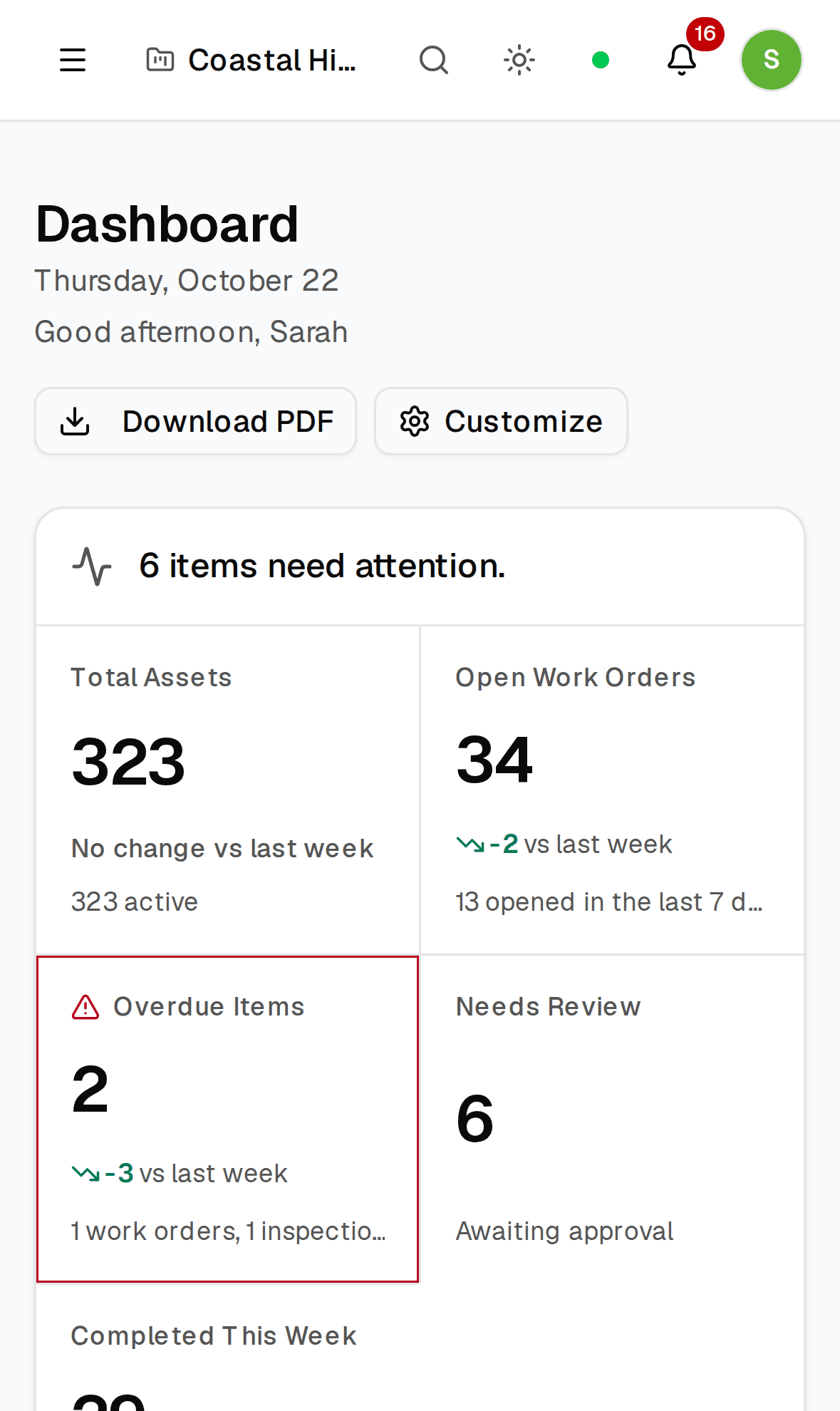
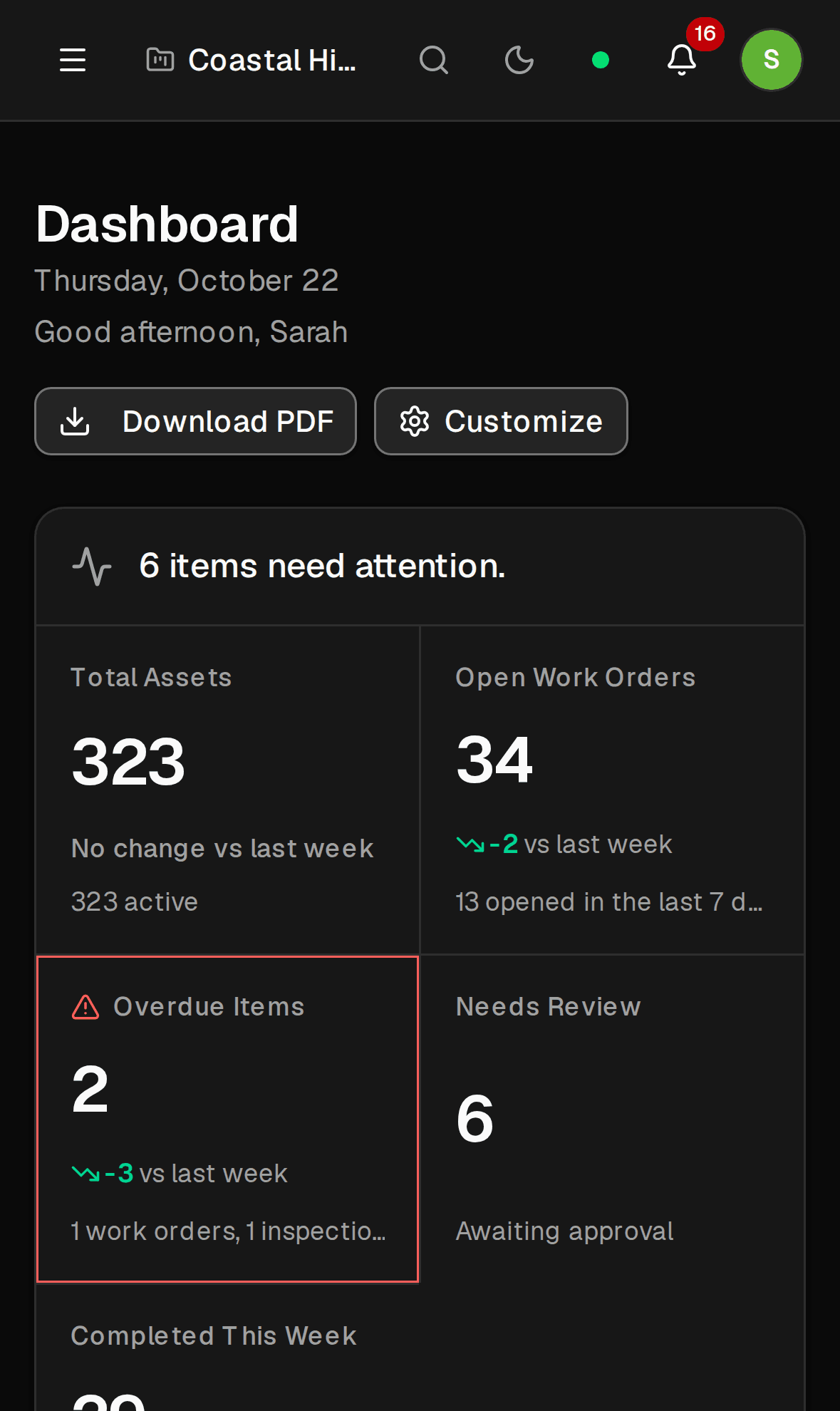
The dashboard opens on what needs a decision today: overdue work orders and inspections, critical findings, compliance items coming due and inspections waiting for approval. Each count shows its change from last week, and each item in the list opens the records behind it.
- Open, overdue and completed work with the change from last week
- Overdue work, critical findings and compliance items in one list
- Inspections waiting for a supervisor's approval
- The dashboard downloads as a PDF for the board packet
Valves, hydrants and flushing on the district's own cycles
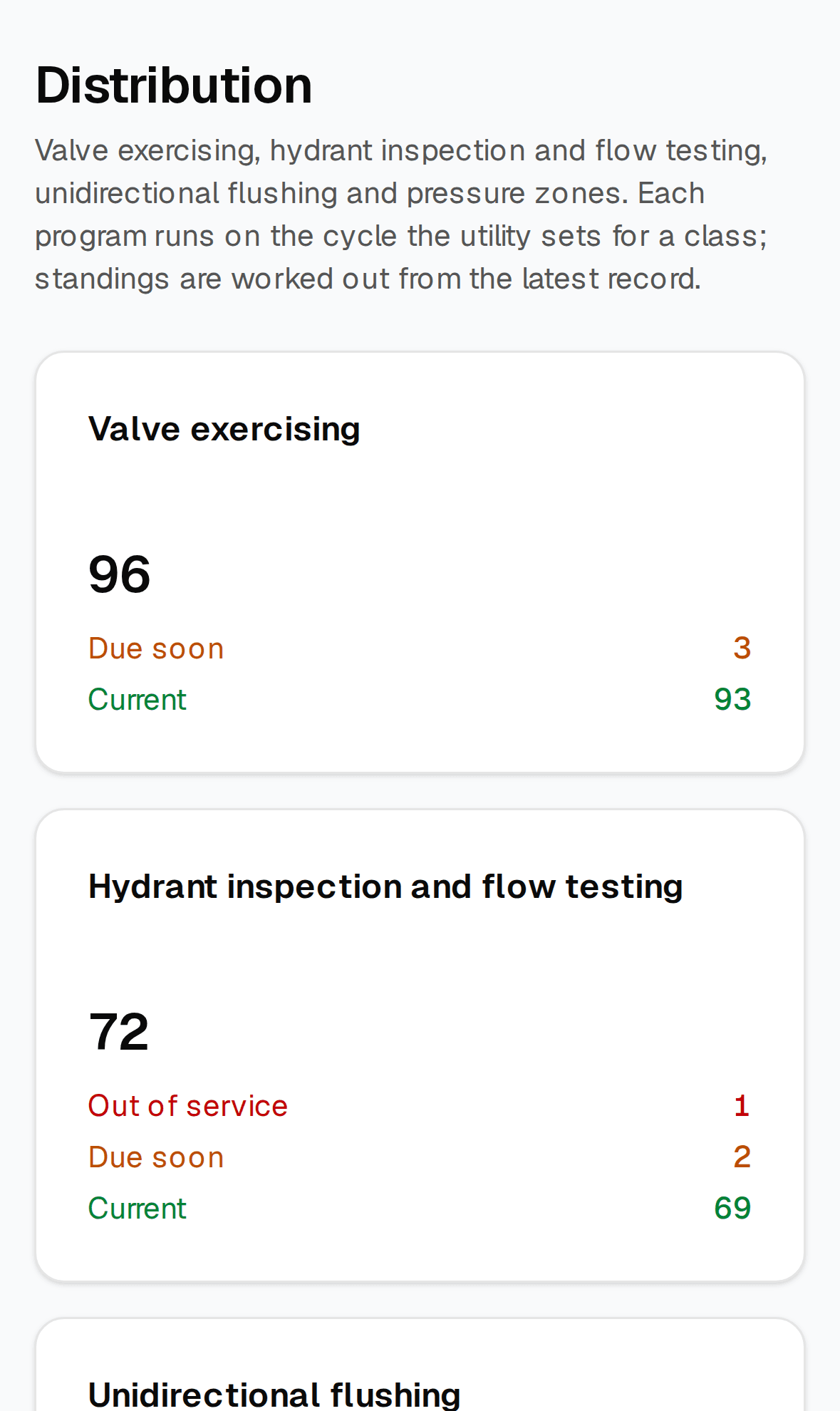
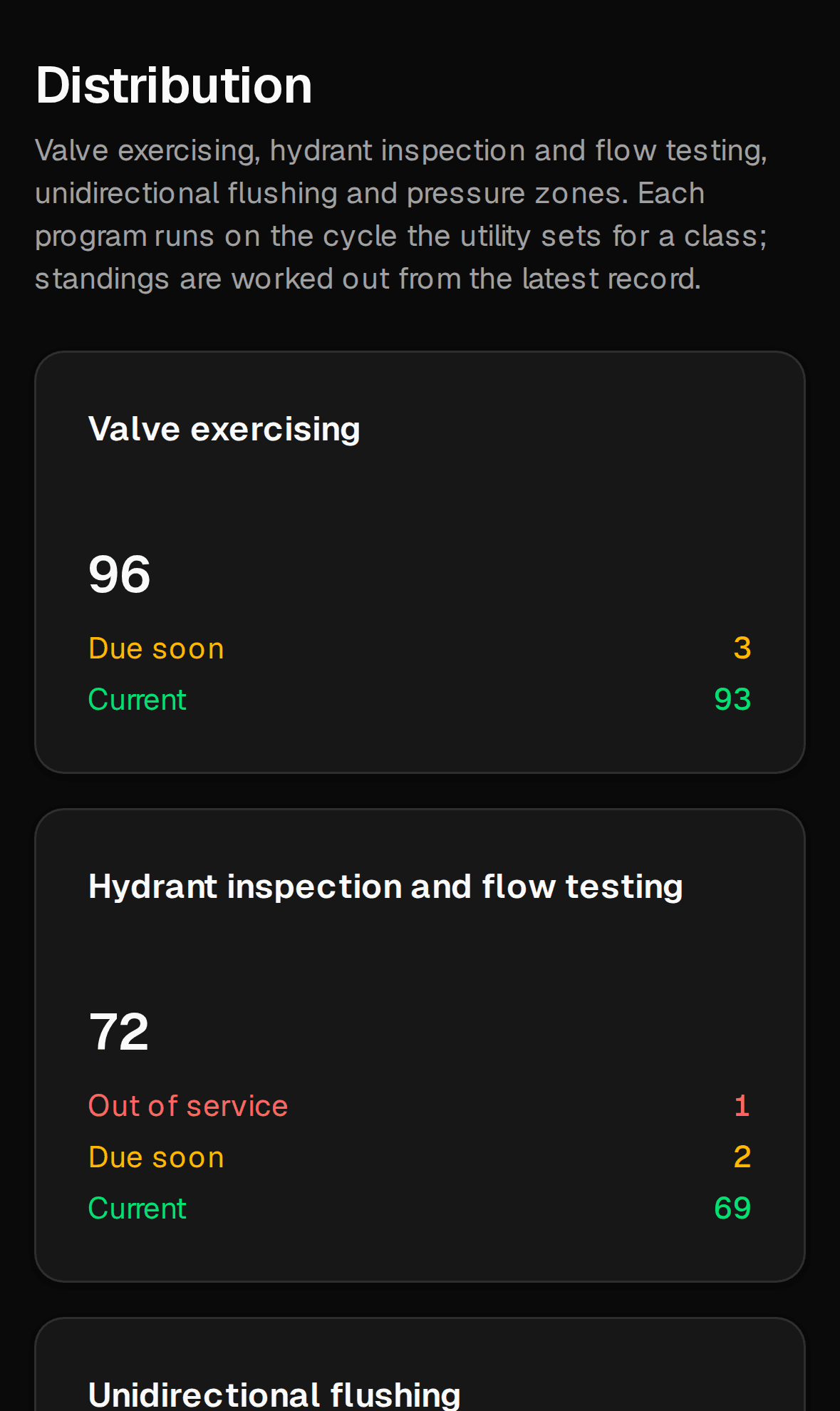
Valve exercising, hydrant inspection and flow testing, and unidirectional flushing each run on a cycle the utility sets for a class of asset. Each entry's standing is worked out from its latest record, so a valve reads current, due soon or overdue without anyone keeping a spreadsheet. Pressure zones group the valves, hydrants and flushing routes that serve them.
- Cycles set in months for each program and asset class
- An inoperable valve or a bagged hydrant opens a corrective work order
- Flow test readings kept exactly as the crew recorded them
- One daily digest of newly overdue entries per program
Cross-connection control under the State Water Board handbook
The backflow register follows the Cross-Connection Control Policy Handbook: its assembly types and hazard degrees, a field test for every assembly at least annually, and 30 days to repair or replace one that fails. A test counts only when the tester held a valid certification on the test date, and a failed assembly carries its repair due date until a passing test closes it.
- Standing worked out from the latest qualifying test
- Failed assemblies show the date the repair is due
- Tester certifications flagged 30 days before they expire
- An existing register and its test history import from a spreadsheet
Sewer spill reporting on the Order's own clocks
Spills are logged under California's Statewide Sanitary Sewer Systems General Order, Order WQ 2022-0103-DWQ. Ithil derives each spill's category from its volume and where it went, then dates every report that category owes: the two hour notification to Cal OES where it applies, the Draft Spill Report within three business days on the California calendar, the Certified Spill Report within 15 days and each month's certification.
- Category 1 to 4 derived from the Order, with the rule text shown
- Due soon and overdue reports checked every 15 minutes
- Report items exported to CSV in the Order's numbering
- Spill records kept for five years and never deleted
California water law, cited and dated
A district answers a few questions about what it operates, and the obligations that apply arrive as dated requirements, each citing its source. The Safe Drinking Water Act, the Lead and Copper Rule Improvements, the Consumer Confidence Report, Cal/OSHA and a special district's filings to the State Controller and the county sit in one posture view.
- Progress and overdue items for every framework
- Each requirement carries the citation it comes from
- Evidence linked from tests, inspections and maintenance
- Public notice clocks for Tier 1, Tier 2 and Tier 3 violations
The whole system on one map
Treatment plants, pump and lift stations, tanks, mains, valves, hydrants and backflow assemblies sit on one map of the service area, clustered at any zoom. Draw an area to select the assets inside it, or color the map by status.
- Asset hierarchy from facility down to component
- Condition and lifecycle cost tracked per asset
- Select assets by drawing on the map
- Work orders and inspections attached to the asset they touch
Disaster recovery and FEMA Public Assistance
When a storm takes a lift station off line, the incident records the declaration, the designated area and the emergency period, and Ithil dates the Public Assistance deadlines from 44 CFR Part 206. Contracts, force account labor, equipment and materials are kept the way FEMA asks for them, so the reimbursement file is built while the crews work.
- Deadlines for the Request for Public Assistance, Impact List, emergency and permanent work
- Project thresholds for the declaration's federal fiscal year
- Federal procurement thresholds checked on each contract
- Water and sewer projects classified against FEMA's Public Assistance policy guide
Capital planning from the same records
Water and sewer projects carry their estimate, approved budget, funding and status through a multi year capital improvement program, built on the same asset register as the maintenance history that justifies them.
- Multi year programs with funding sources
- Projects tracked from candidate through completed
- Estimated and approved cost on every project
- Priority set by the district
The same records from the truck
The web app runs on a phone, so an operator can check the morning's overdue items or a valve program's standing from the field without calling the office.
The district's history comes with it
Asset registers, work orders, inspections, preventive maintenance schedules and backflow test history come across from CSV or Excel exports. The import recognizes the export layouts of the maintenance systems utilities most often run, maps their columns, and shows exactly what it would write before anything is saved.
Completed work arrives as history with its original dates, so a migrated backlog does not open as a wall of overdue items. The maintenance page covers how the work runs once it is in.
Built for public utilities
Data isolation
Each district, utility and authority operates in its own isolated database schema. Its records are never commingled with another agency's.
Security and compliance
Aligned with NIST SP 800-53 Rev 5 controls across access management, audit logging and data protection. SOC 2 Type I Ready.
Public records
Every action is timestamped and attributed. Records are searchable and exportable, with automatic PII redaction for public records requests.
Accessible
WCAG 2.1 AA compliant. Section 508 accessibility requirements met.
Ithil deploys with a water and wastewater template: the asset types, inspection programs, compliance frameworks and workflows a district runs, configured before the first login.