
 Ithil
FEMA Public Assistance
Disaster recovery
For cities, counties and water districts, Ithil keeps the FEMA Public Assistance record for each declared incident, from the first photograph of a damaged site to the summary records FEMA reviews.
Damage captured in the field, with or without signal
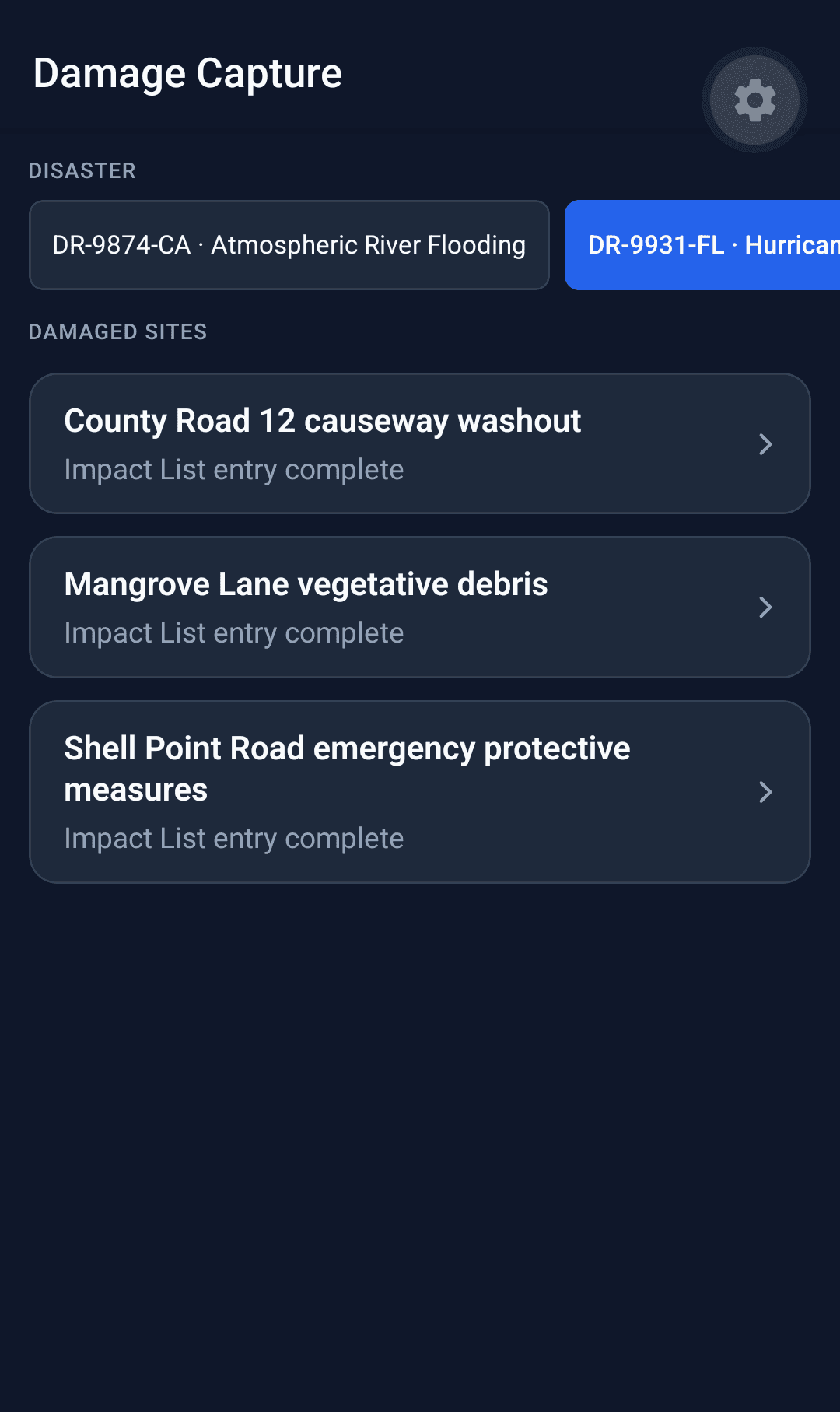
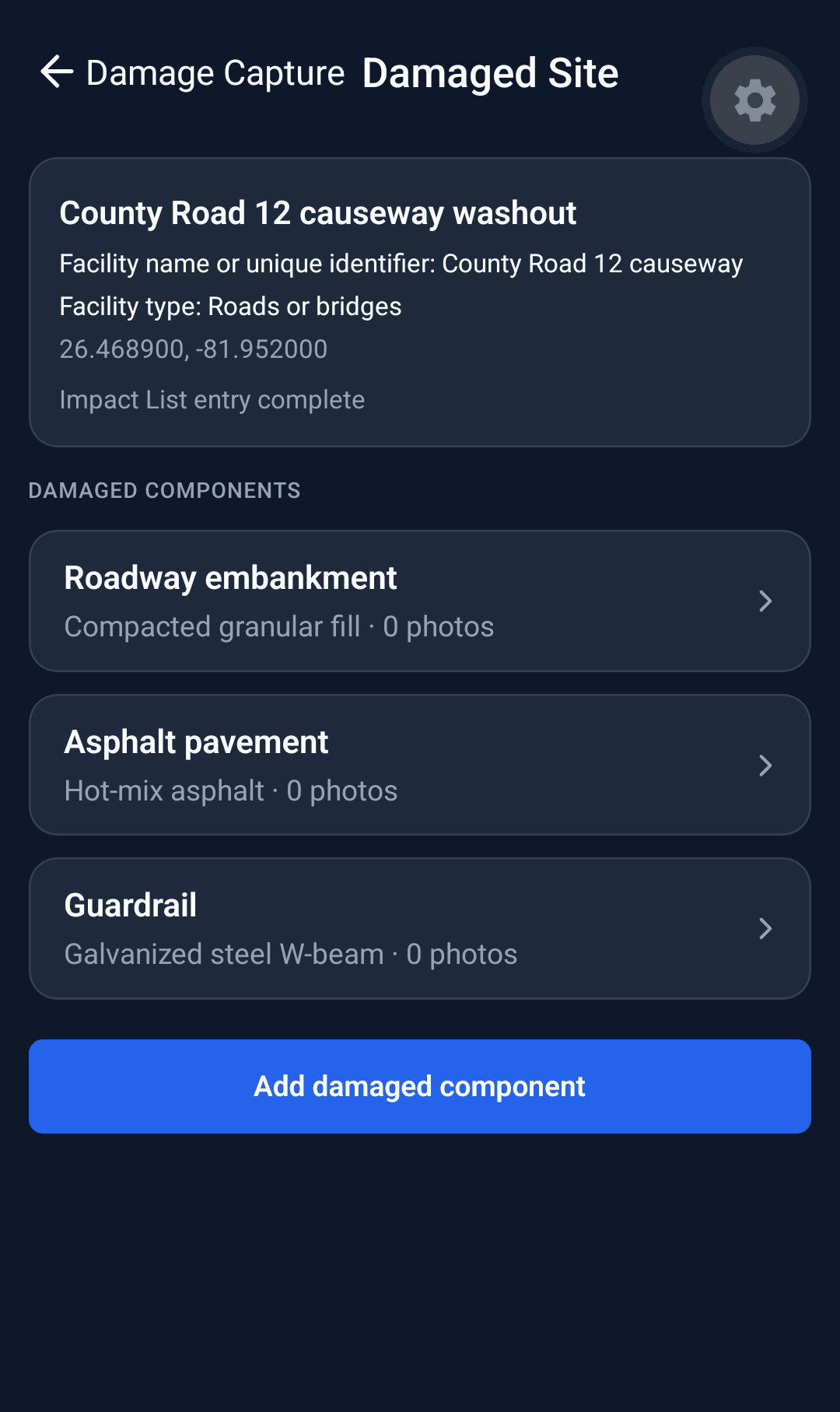
Crews record each damaged site on the Ithil mobile app with photographs, a GPS location and the damaged components, following the sections of FEMA's Damage Information form. Every entry is saved on the phone first and sent when the device reconnects, so a site walked in a dead zone after a storm is kept.
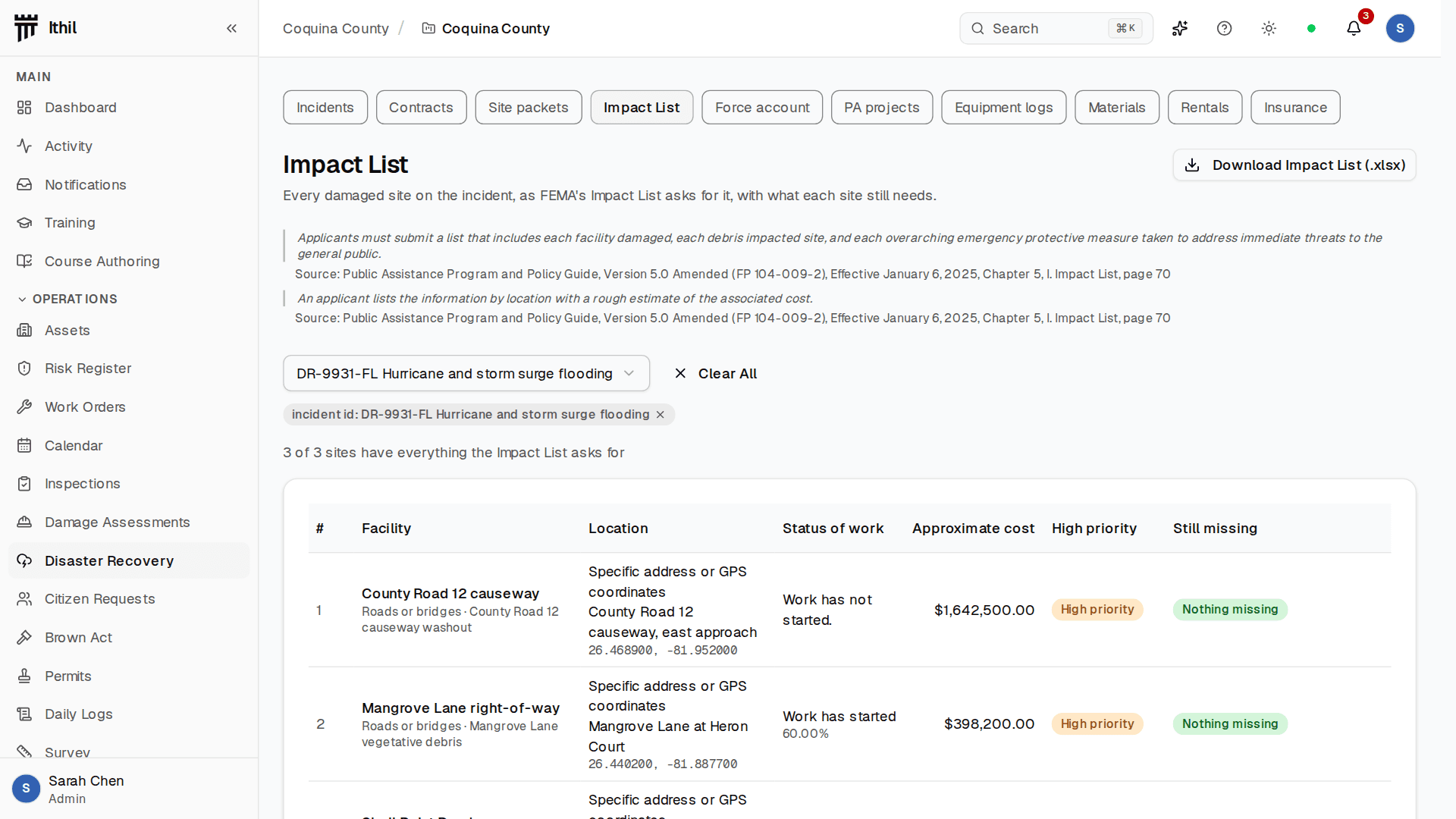
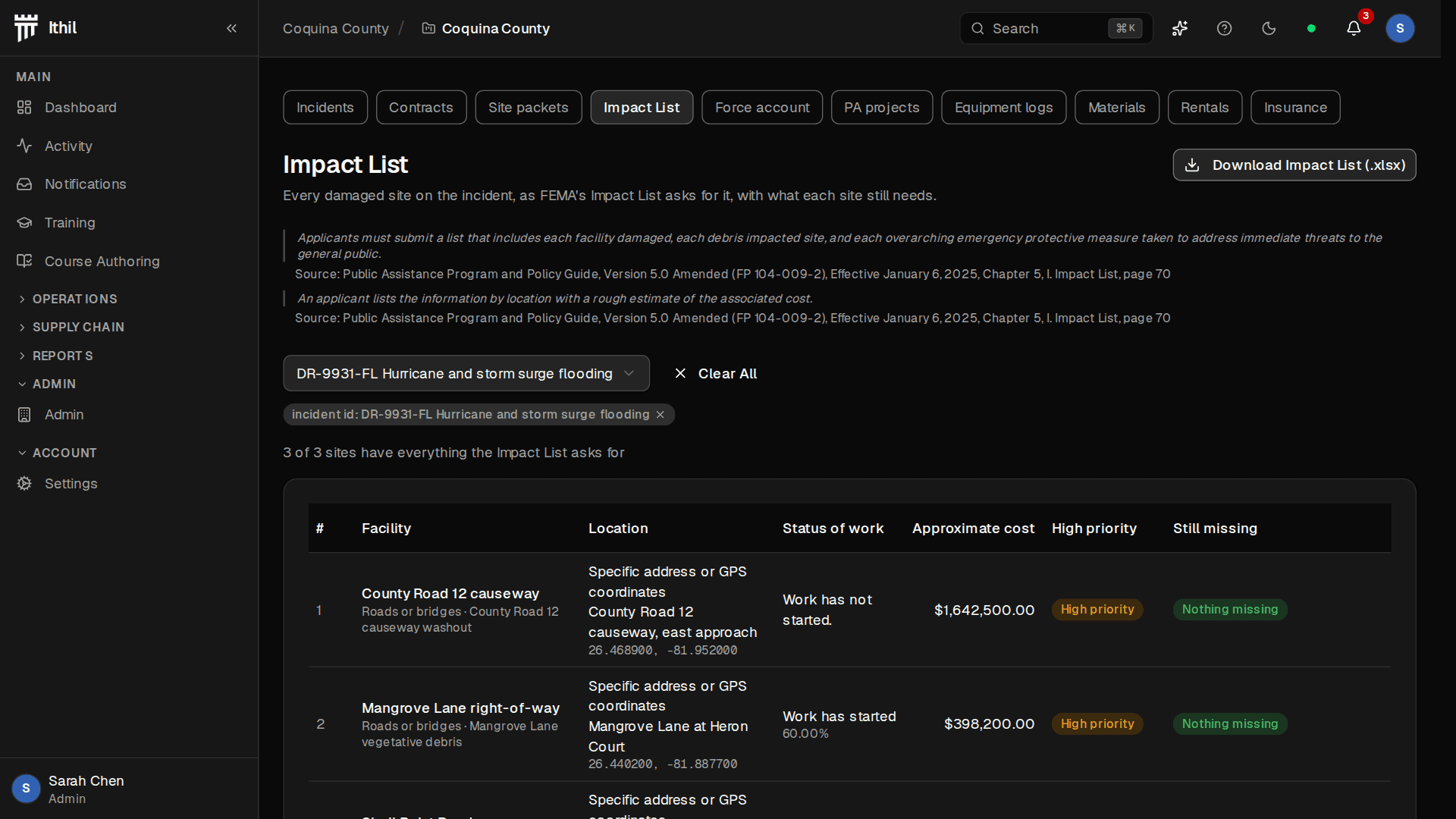
Each site becomes a damage assessment in the web app and carries its description of work into the Impact List, which exports under the labels of FEMA's form.
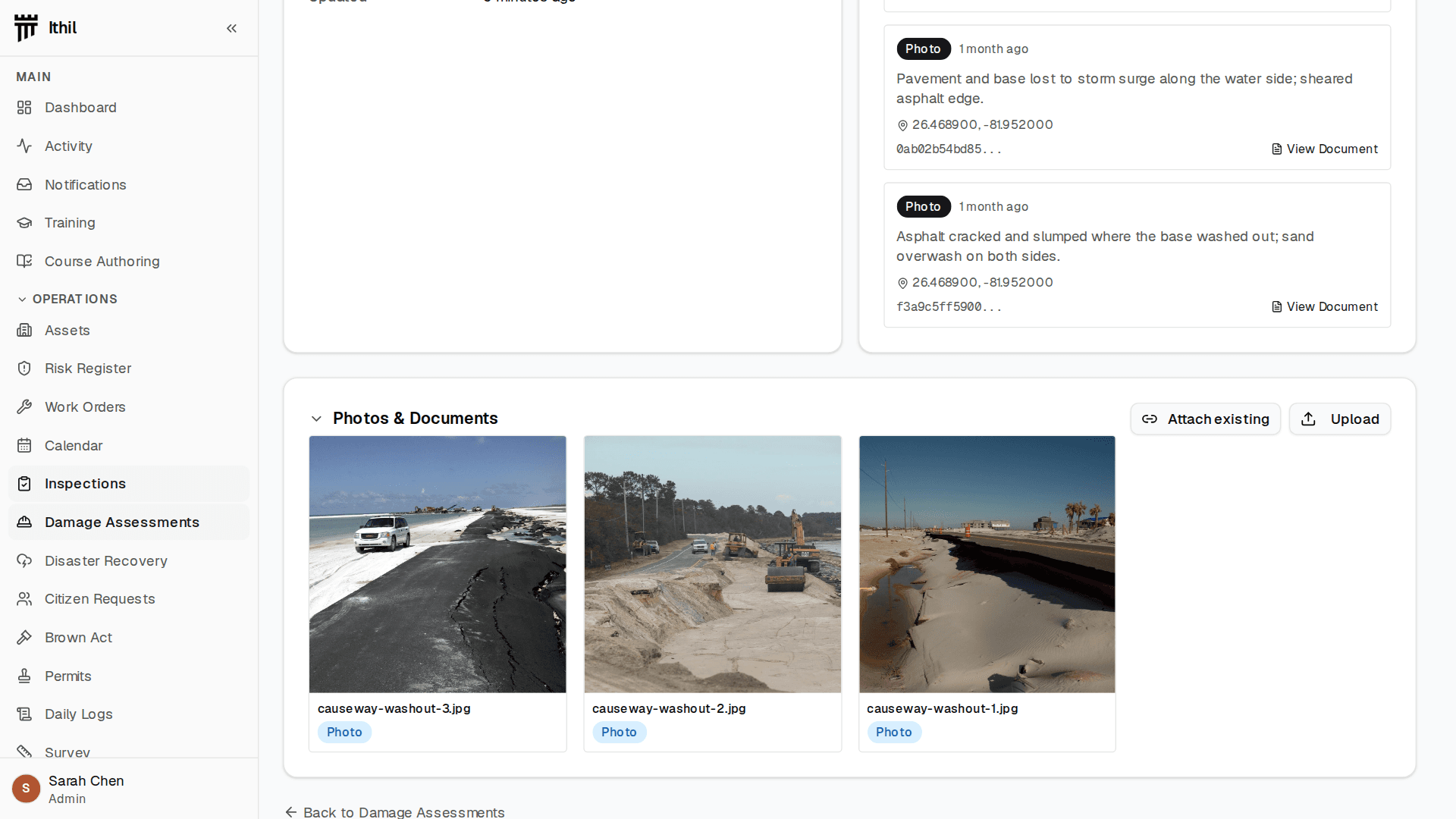
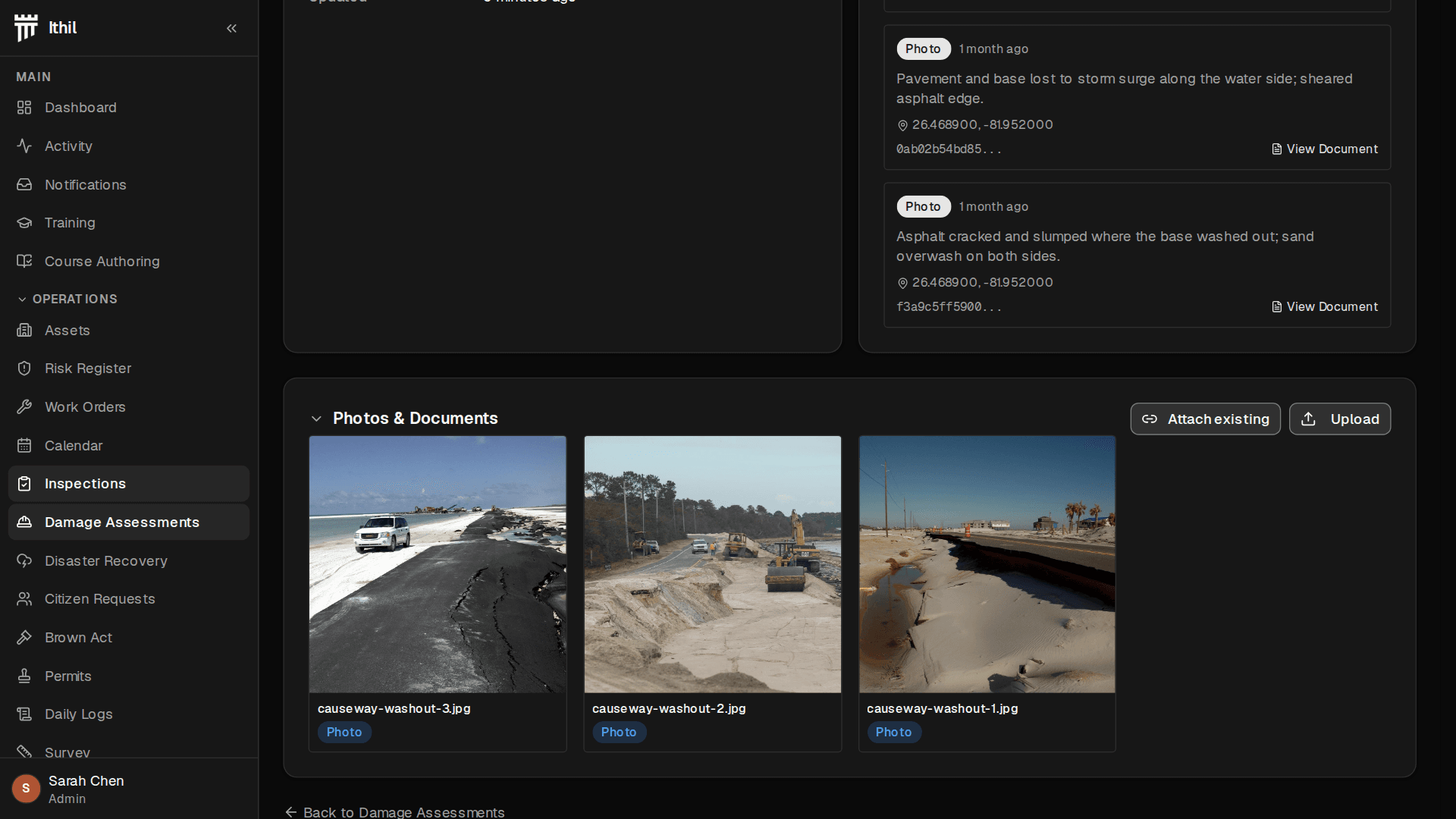
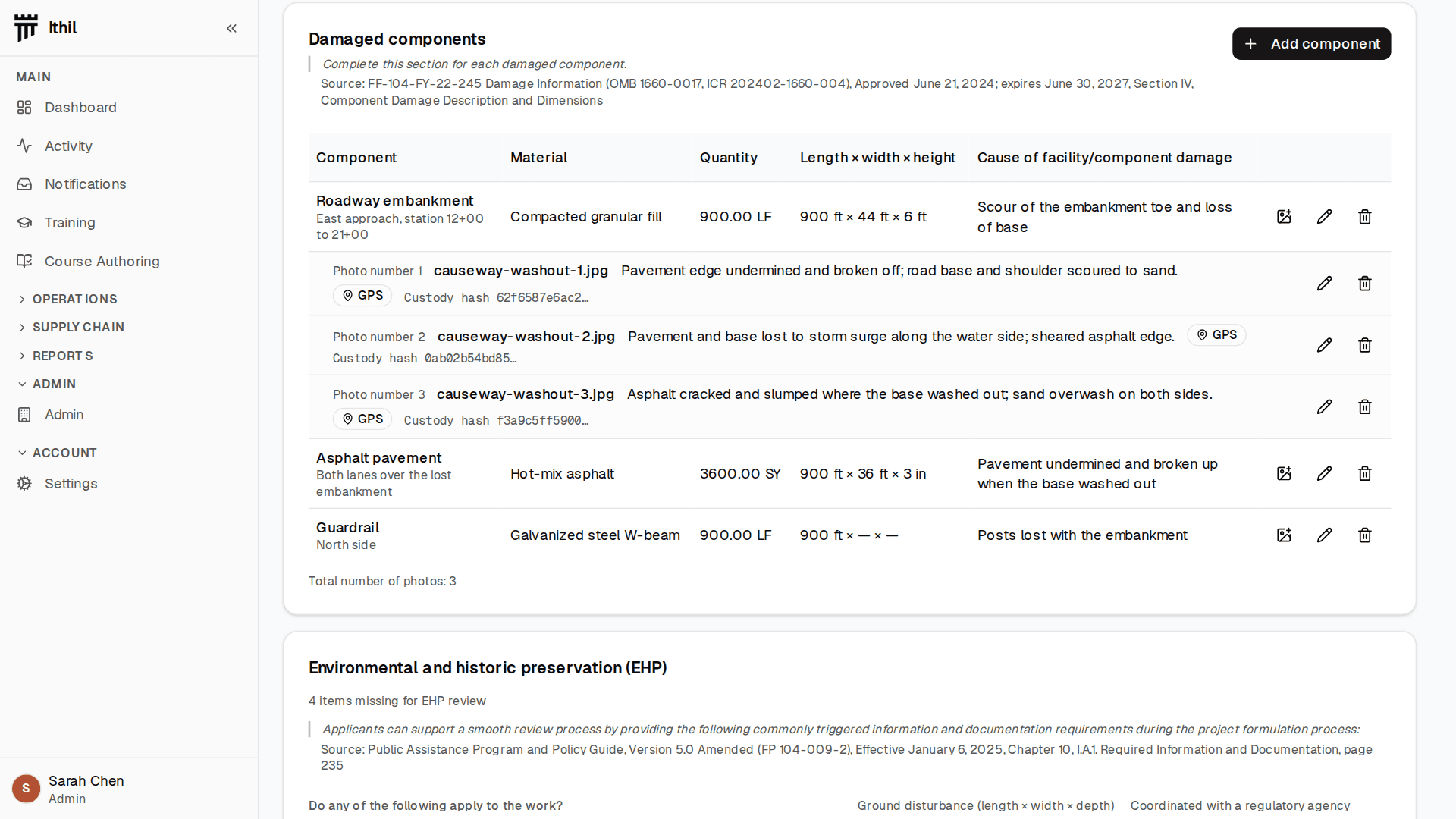
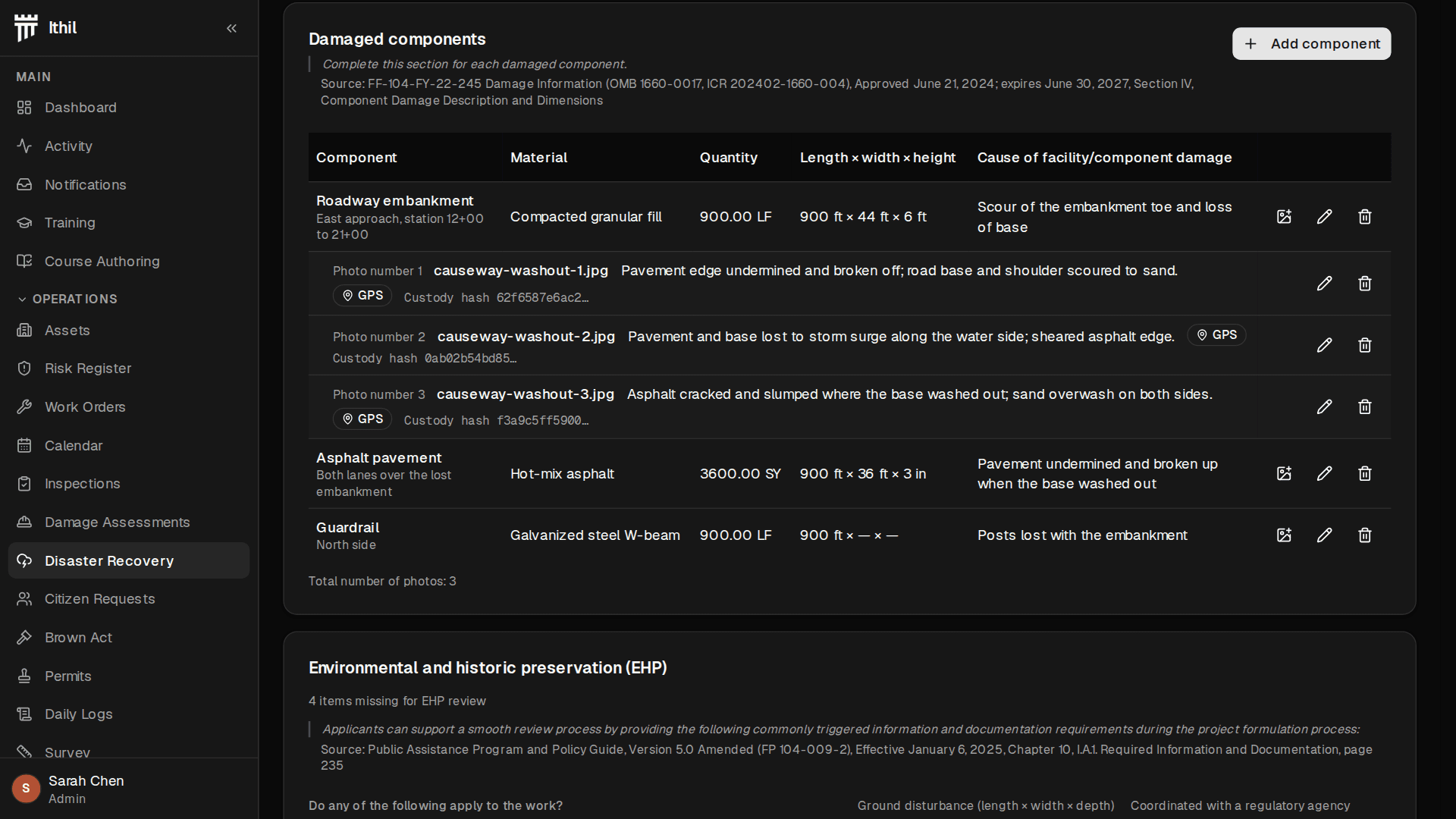
The incident opens from the declaration
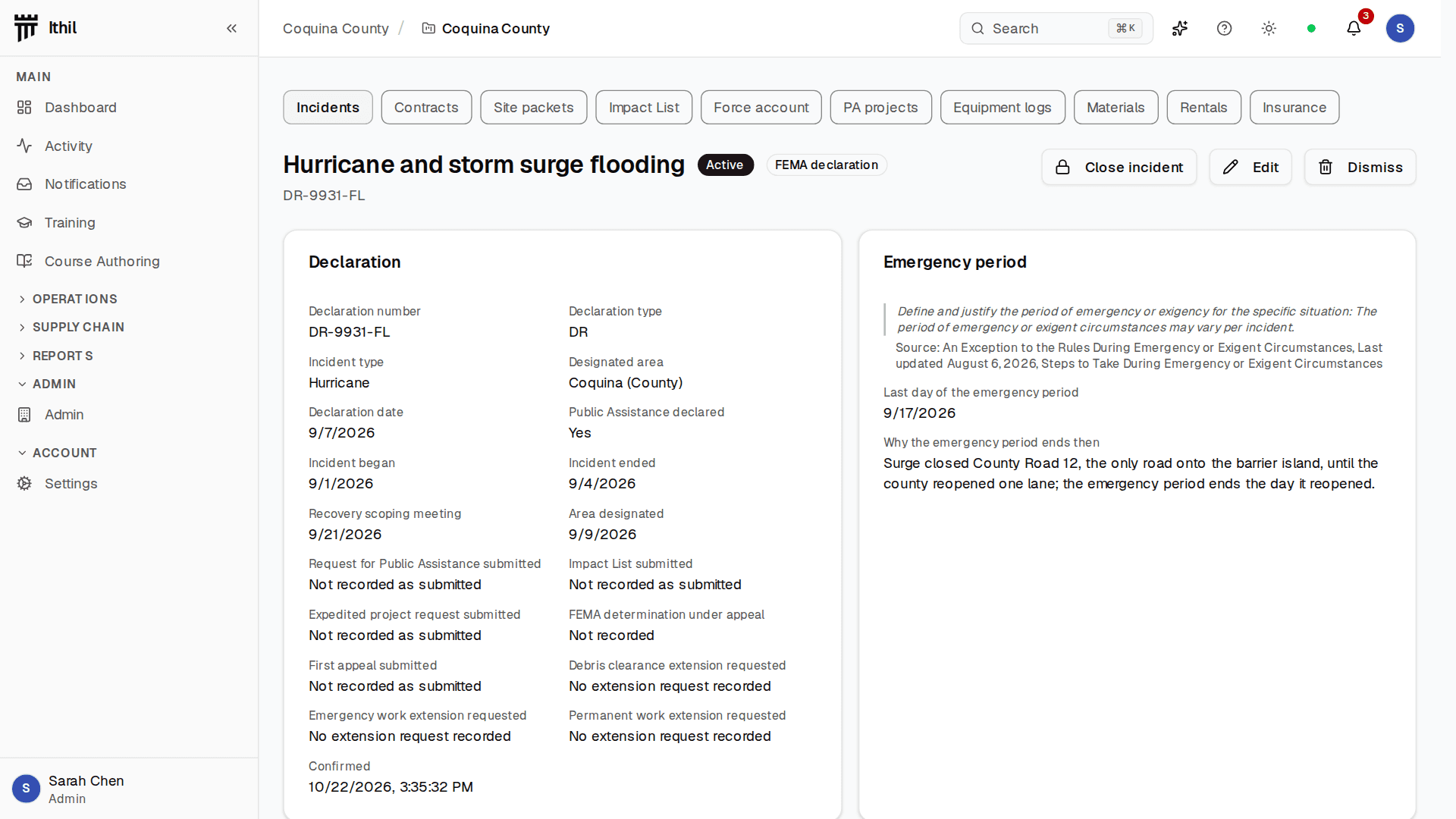
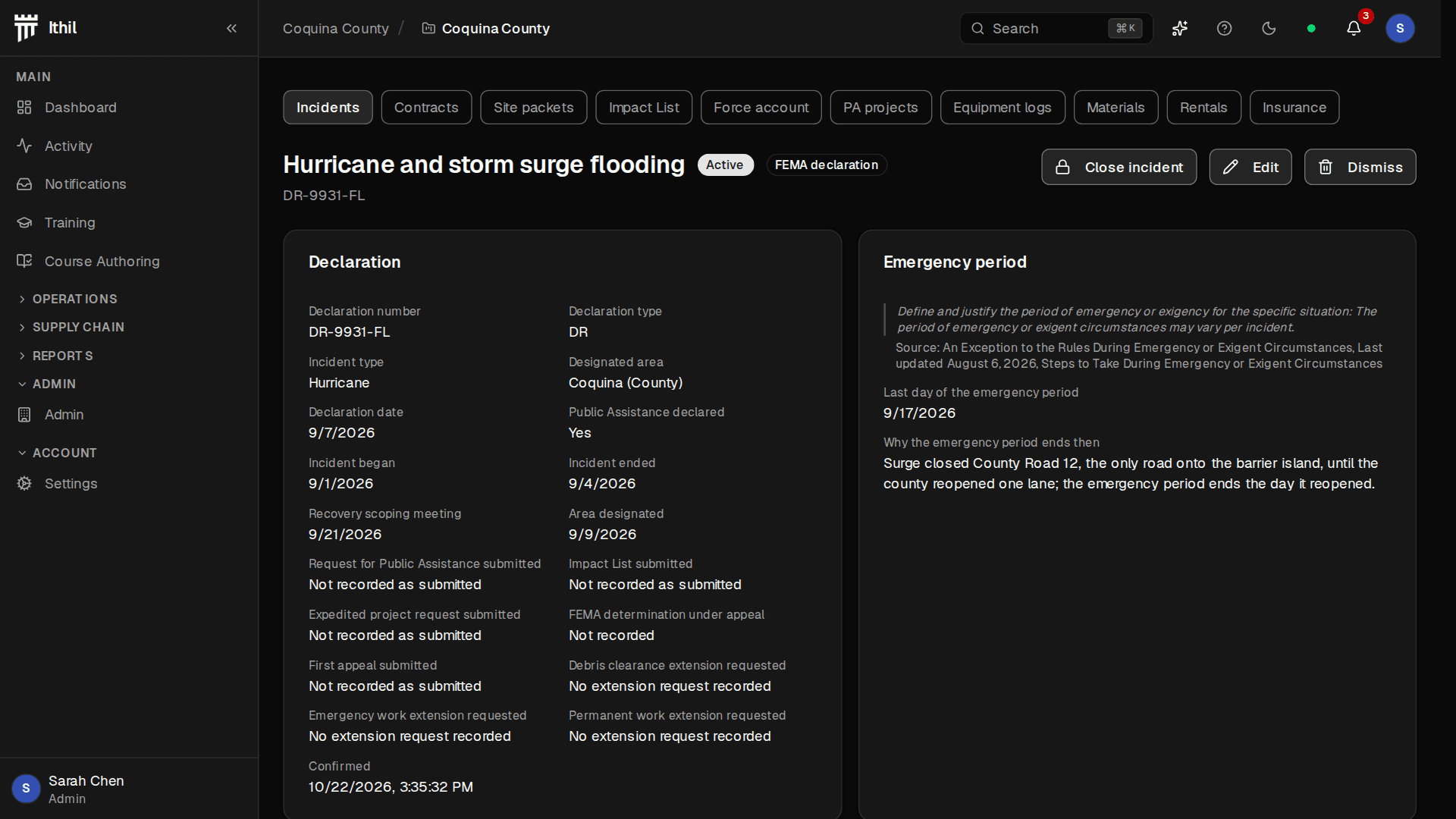
Ithil reads FEMA's disaster declarations from OpenFEMA every day for the organization's county. When a new declaration with Public Assistance covers it, Ithil proposes a recovery incident and an administrator confirms it. The declaration date then drives every deadline on the incident.
Force account labor and equipment, checked as entered
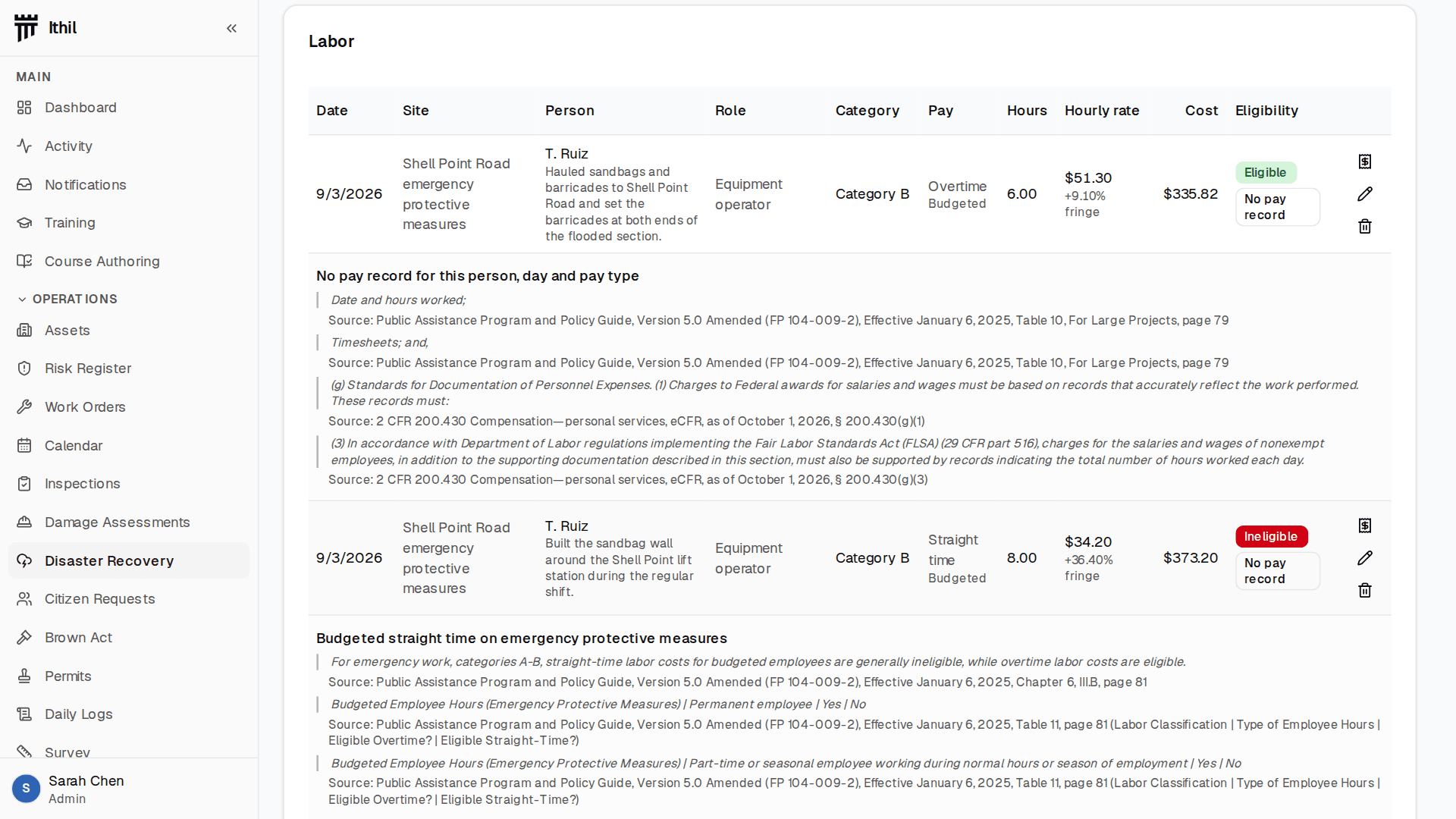
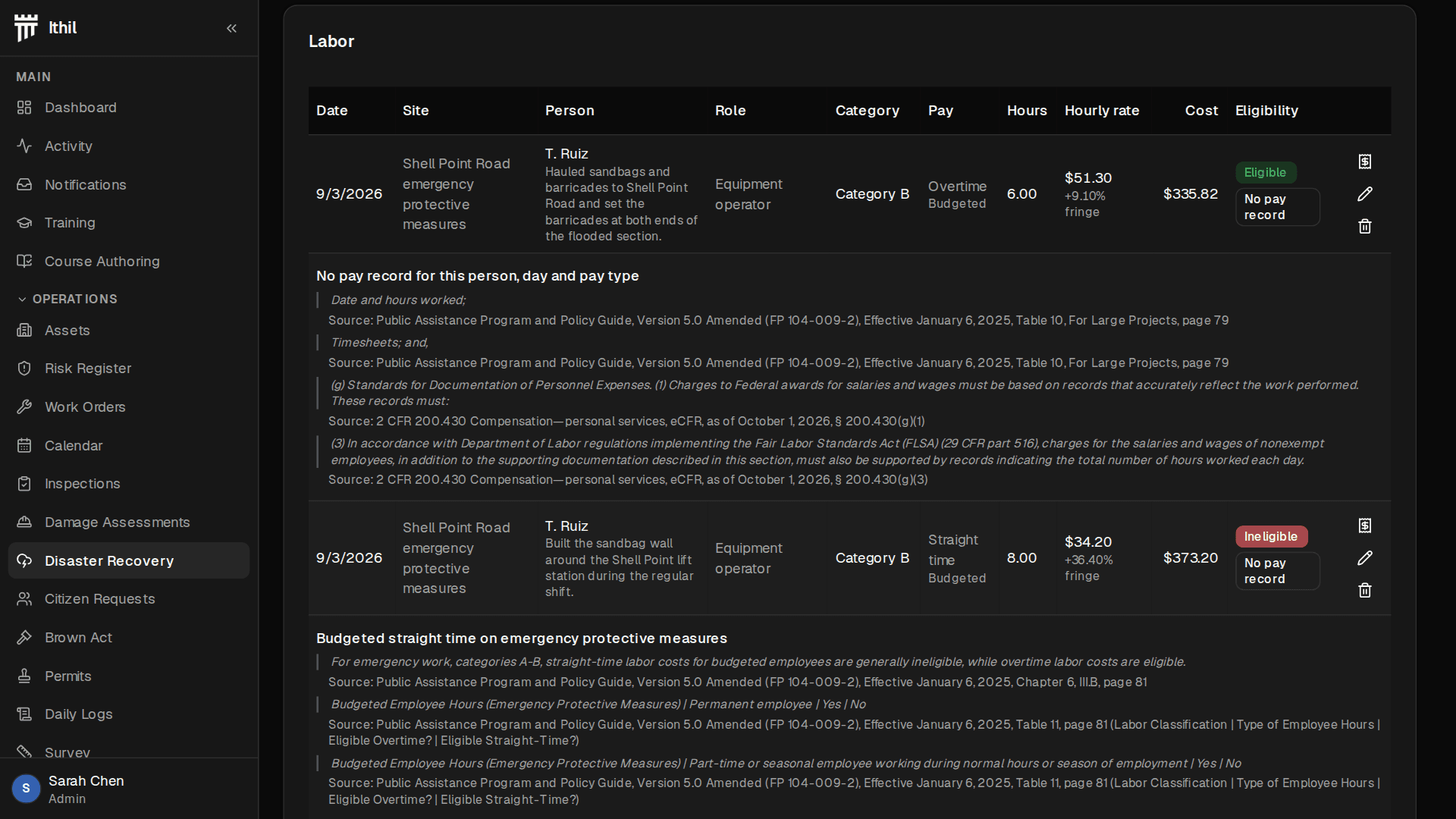
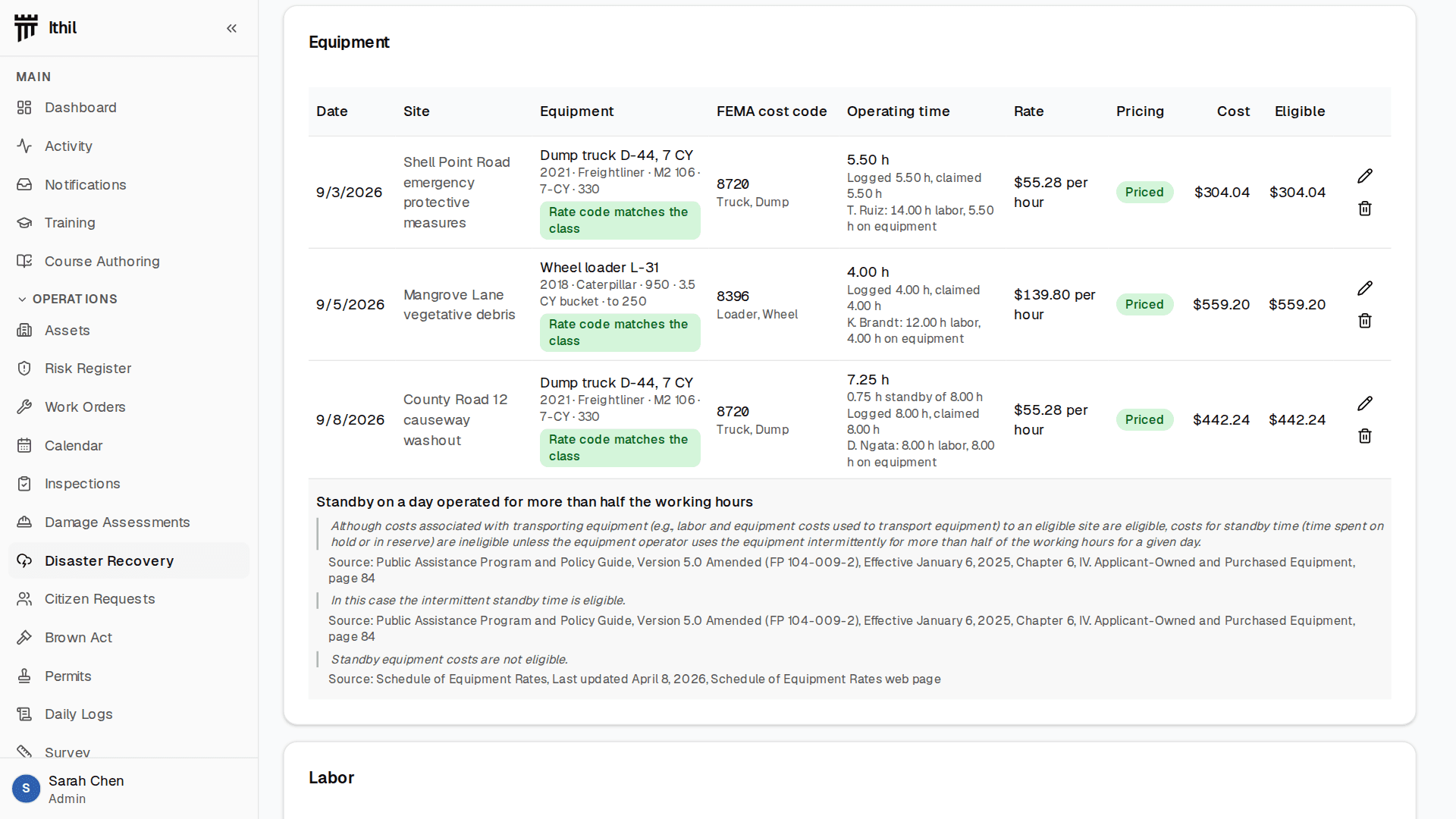
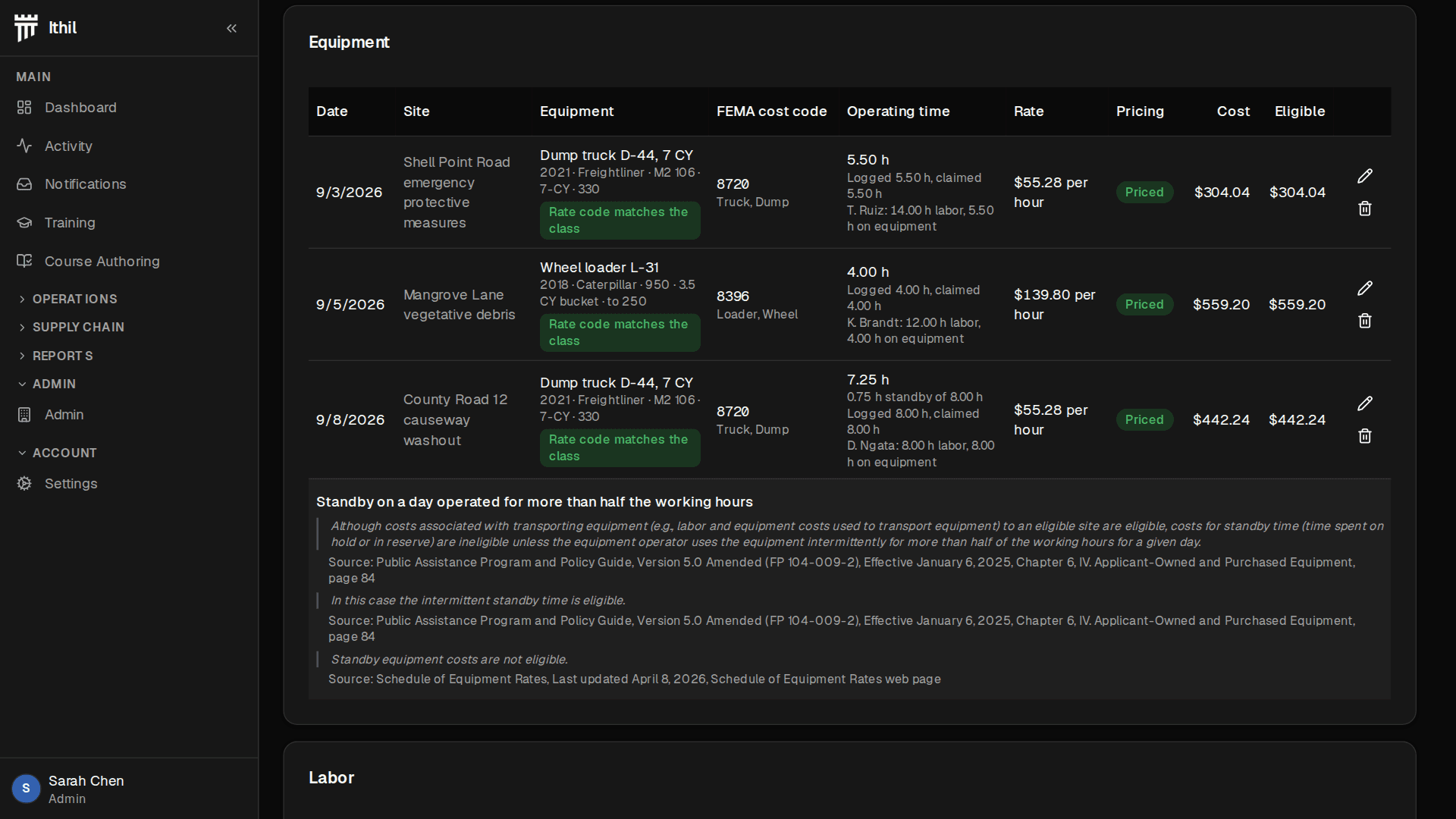
Labor and equipment are recorded by the day. Each labor line is sorted into eligible, ineligible or needs review under Chapter 6 of the Public Assistance Program and Policy Guide (PAPPG) Version 5.0, by category of work, pay type and budget status. Budgeted straight time on emergency protective measures, for example, is held out of the eligible total from the day it is entered.
Equipment is priced by cost code from FEMA's Schedule of Equipment Rates, with the 2025 schedule loaded as published. Ithil counts operating time, refuses hours beyond the usage log, and caps any one asset at 24 hours a day.
Materials, rentals and insurance in the same record
Materials are recorded as drawn from stock or purchased. Rented equipment carries its rental terms and the comparison with buying that PAPPG Chapter 6 asks for. Insurance policies list their covered locations, and actual or anticipated proceeds are deducted from each site and each project, with a flag on any proceeds not yet allocated.
FEMA's summary records, filled from the record
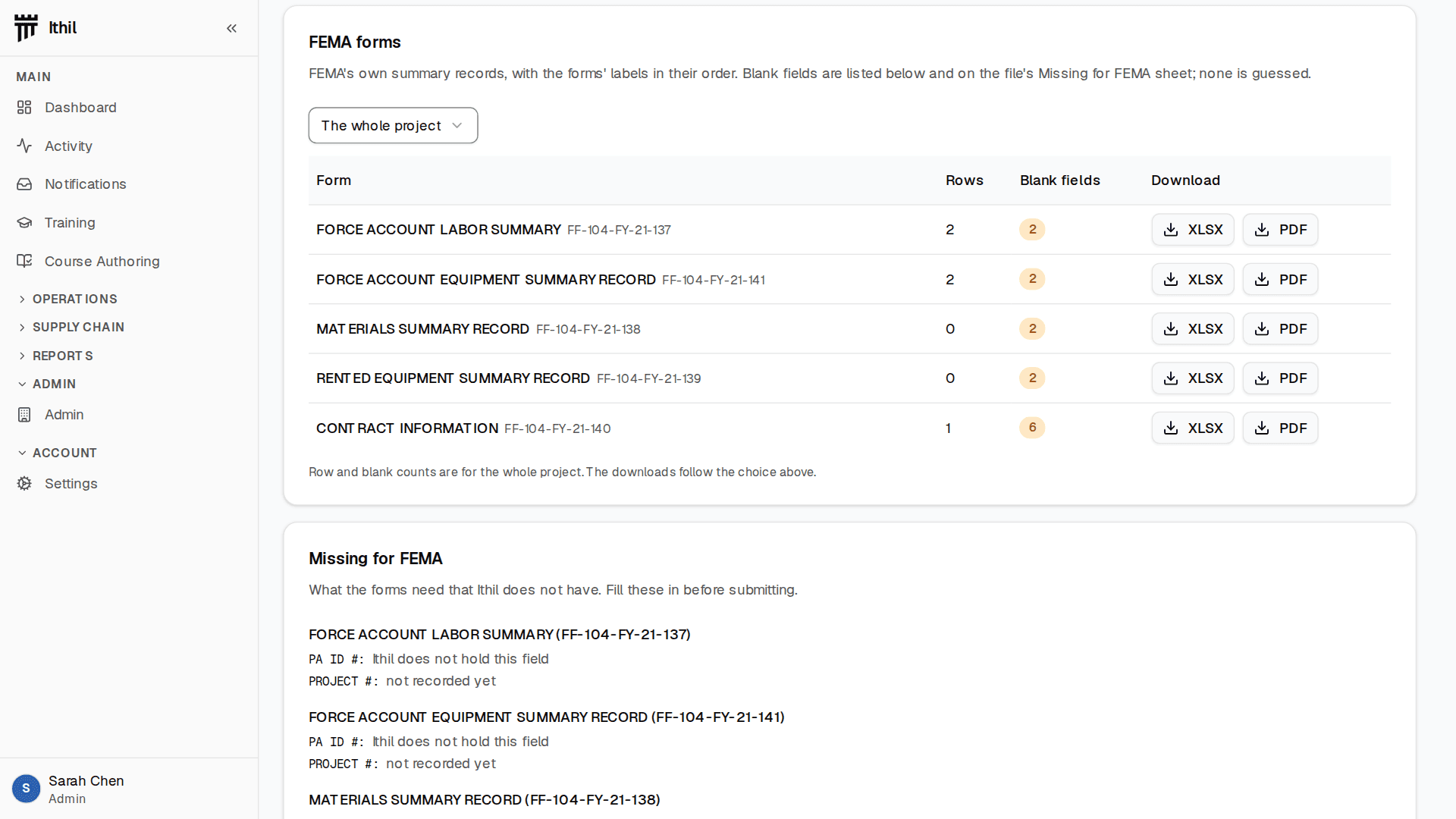
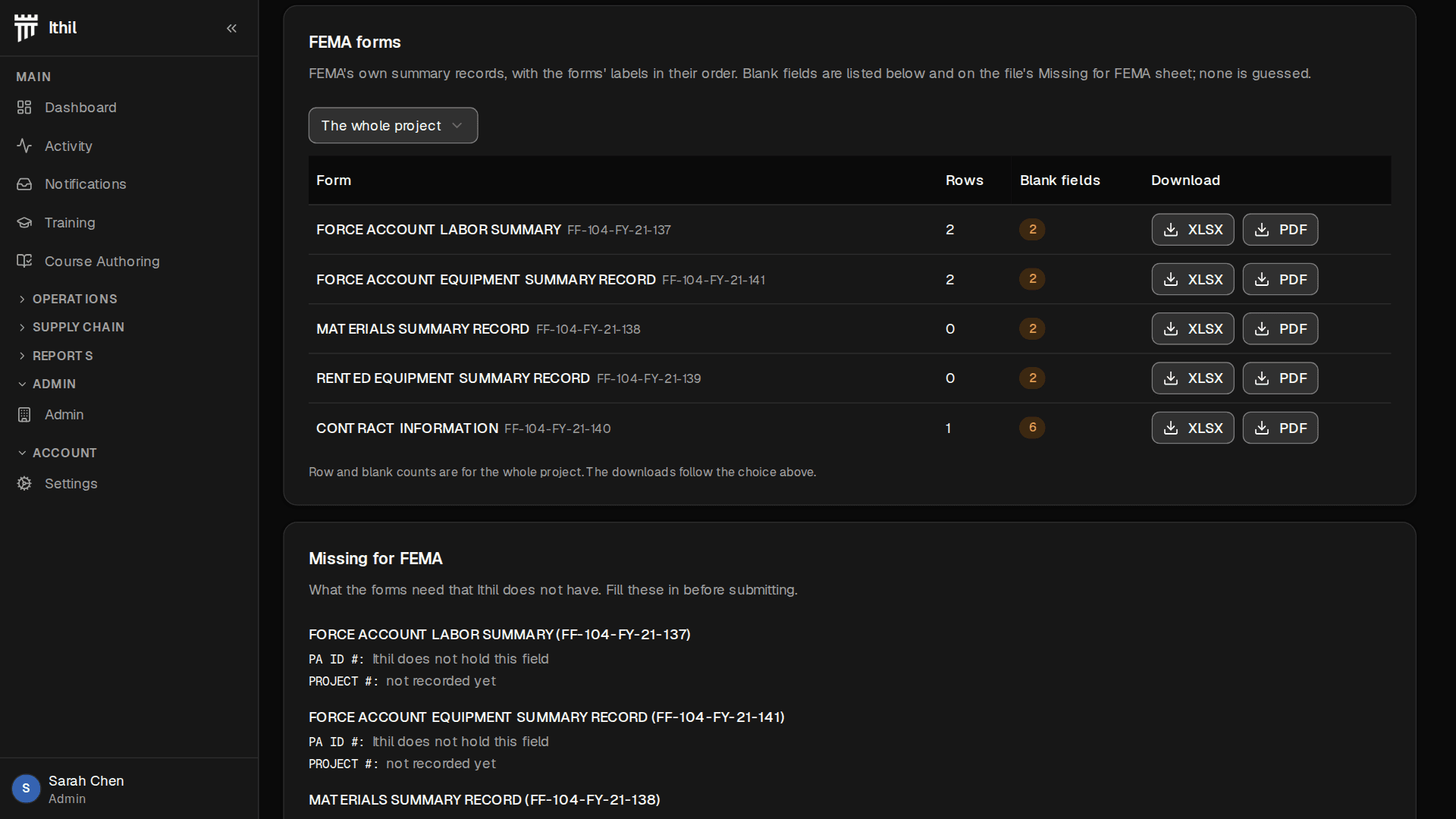
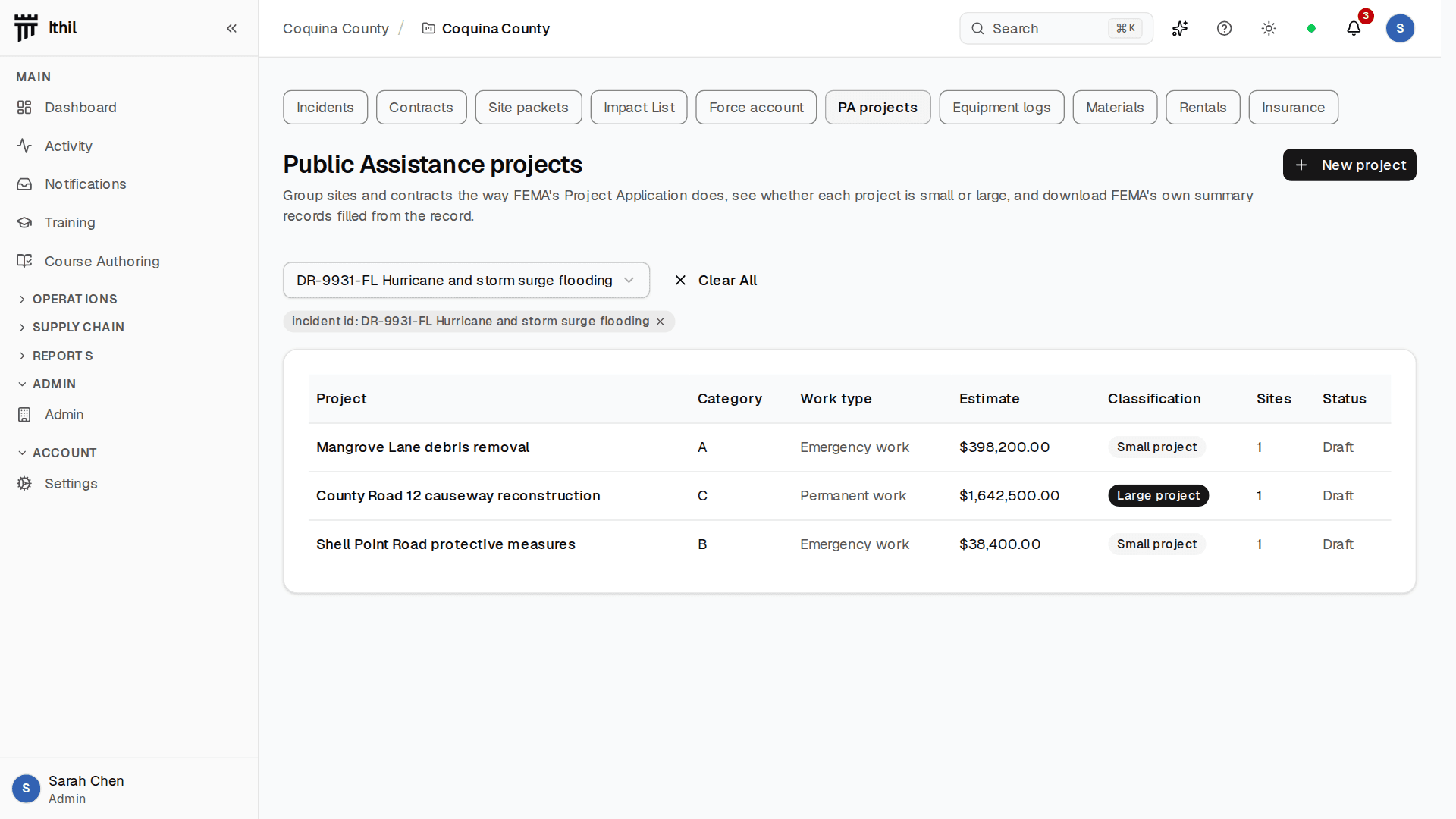
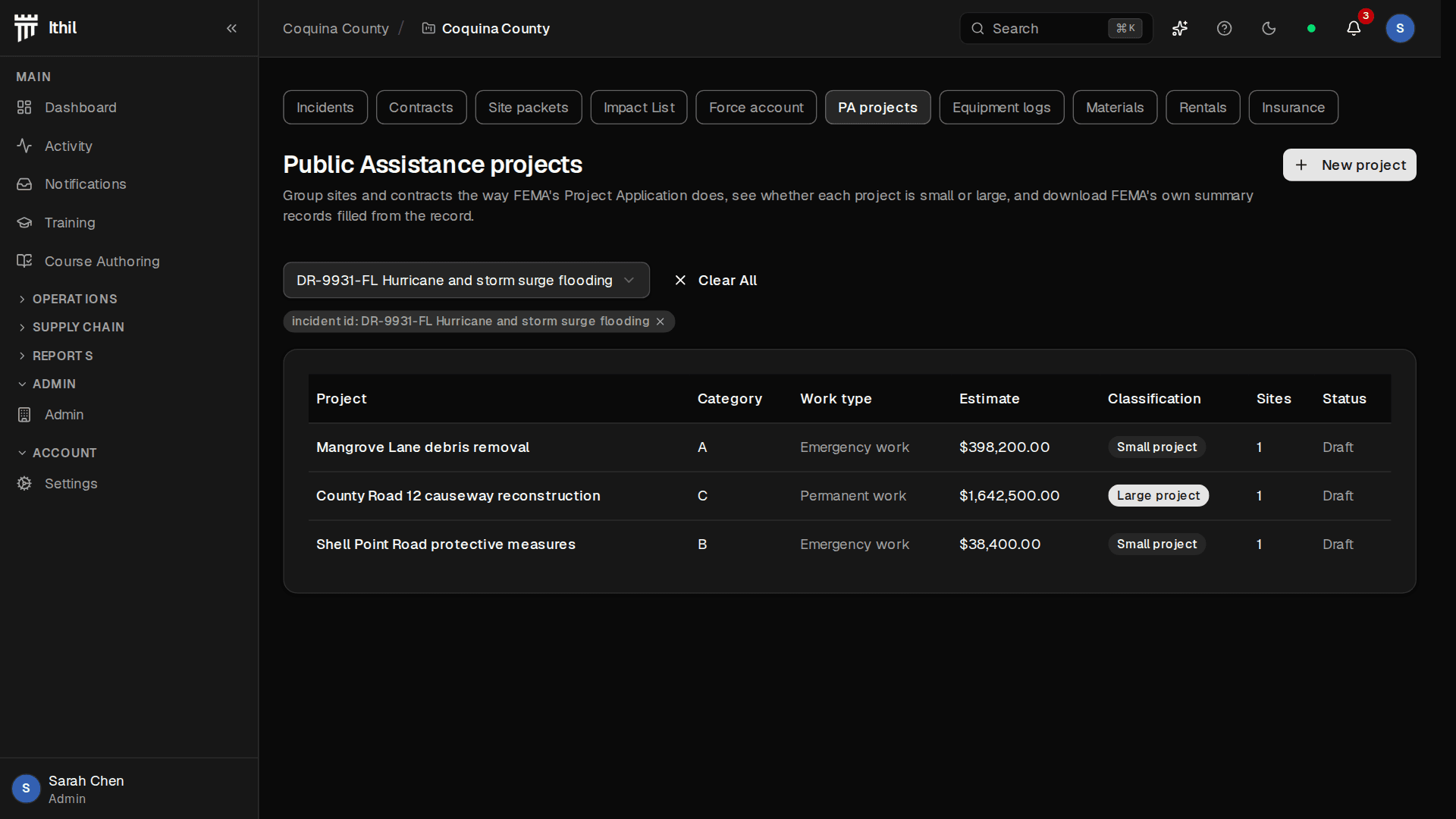
Sites and contracts are grouped into Public Assistance projects, each with its FEMA category of work. Ithil fills FEMA's summary records for each project: force account labor, force account equipment, materials, rented equipment and contract information. Each downloads as an Excel workbook or as an accessible PDF built to the PDF/UA standard, with a list of anything still missing.
A packet for every site
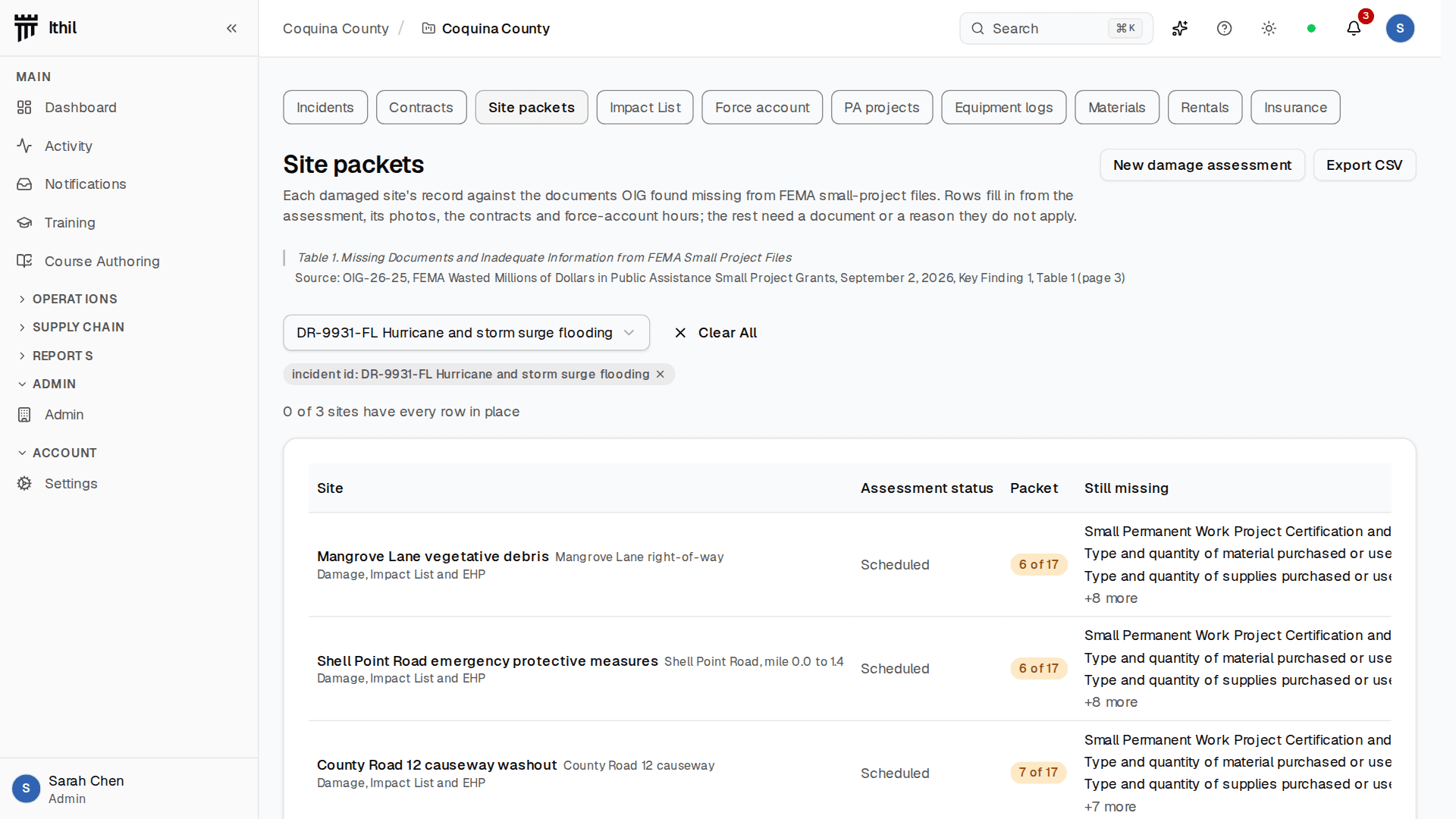
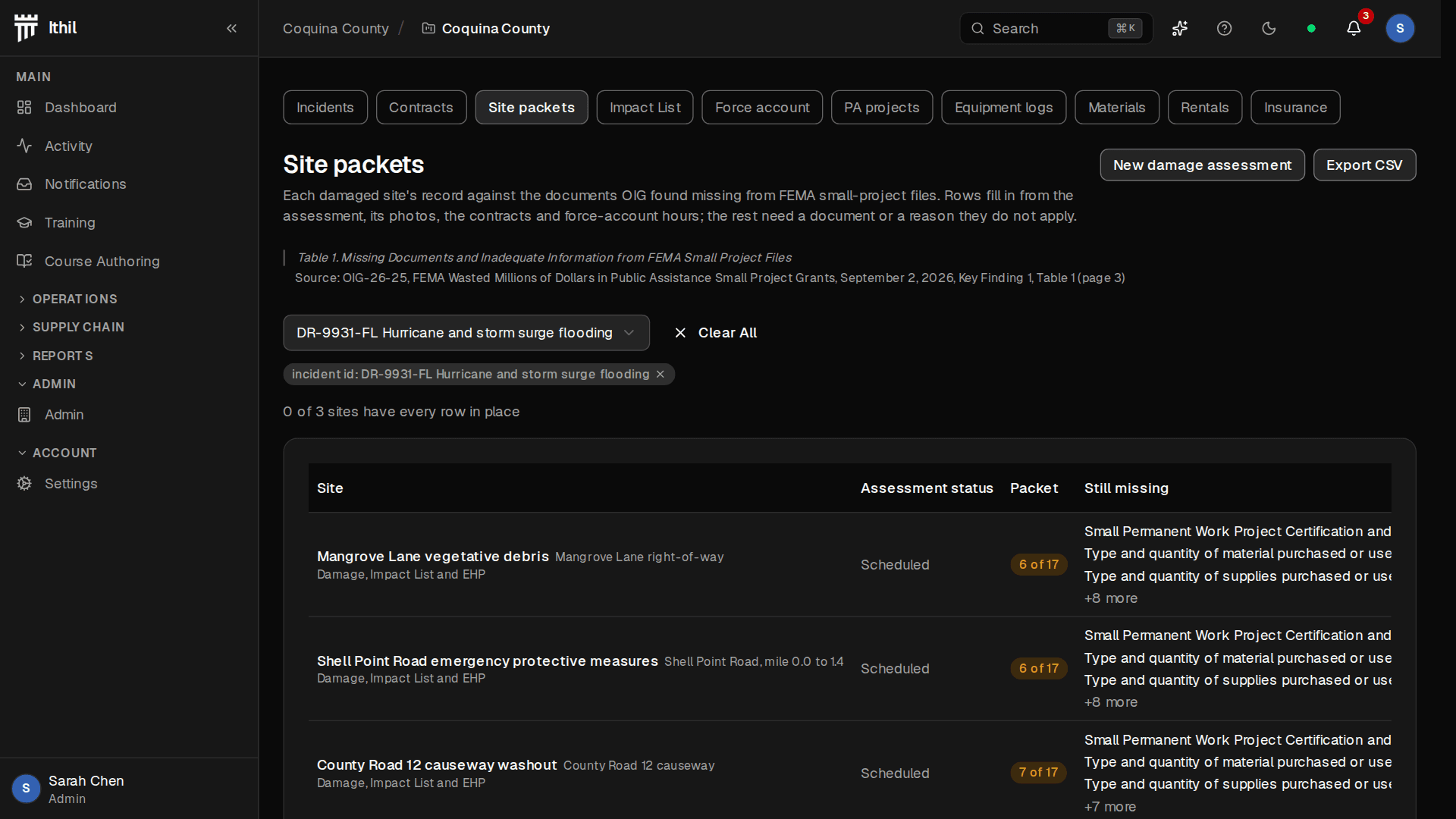
Each damaged site has a packet checked against the 17 items in Table 1 of DHS Office of Inspector General report OIG-26-25. Where Ithil already holds the evidence, the item fills itself. Otherwise it is satisfied by a linked document or by a written reason it does not apply, so a bare checkmark cannot be recorded.
Deadlines and project size, computed and cited
Ithil derives the deadlines below from the dates on the incident. Each one is shown on screen with the section it comes from, and administrators are notified when one is due soon or overdue.
- Request for Public Assistance
- 30 days after the area is designated44 CFR 206.202(c); PAPPG v5.0, Chapter 3, III
- Impact List
- 60 days after the recovery scoping meeting44 CFR 206.202(d)(1)(ii); PAPPG v5.0, Chapter 5, I.A
- Debris clearance and emergency work
- 6 months from the declaration date44 CFR 206.204(c)(1); PAPPG v5.0, Chapter 11, II
- Permanent work
- 18 months from the declaration date44 CFR 206.204(c)(1); PAPPG v5.0, Chapter 11, II
- First appeal
- 60 days after the FEMA determination44 CFR 206.206(b)(1)(ii)(A)
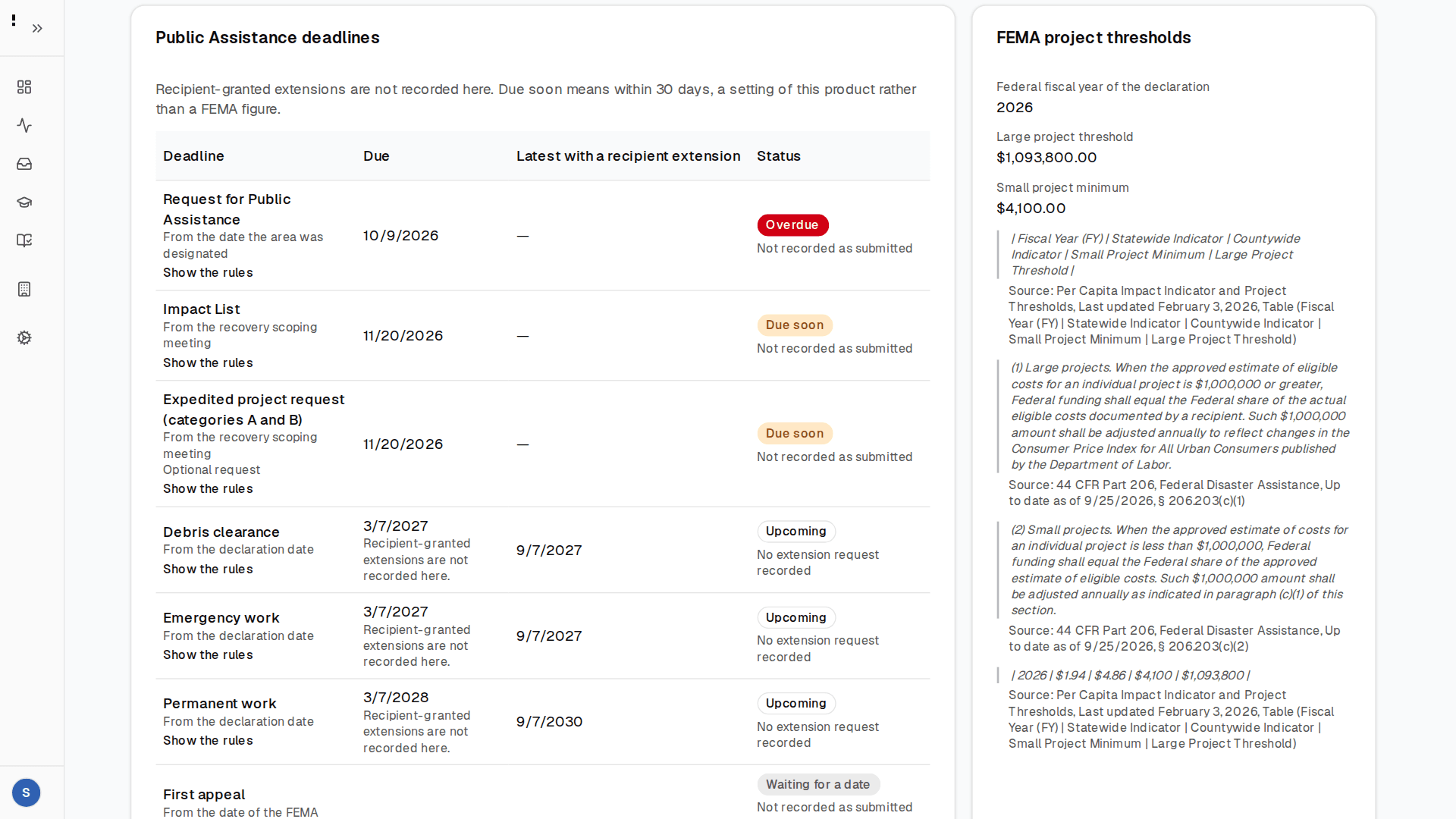
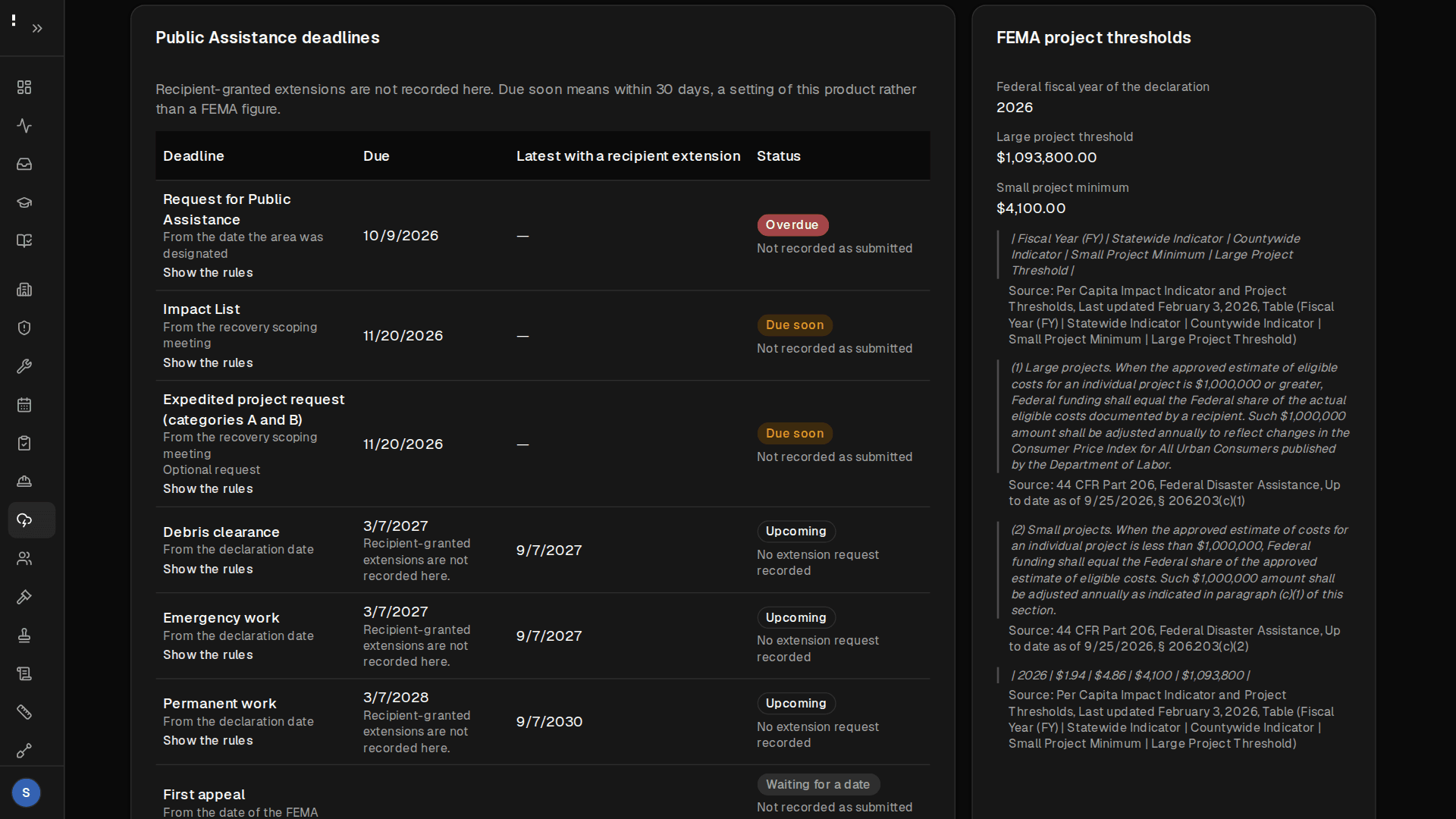
Each project is classified as small or large against FEMA's project threshold for the federal fiscal year of the declaration, under 44 CFR 206.203(c). Ithil then shows which column of the PAPPG documentation tables applies to it.
For the policy background, read our post on planning for disaster recovery with less federal help.