 Ithil
Water
Compliance
Federal and California obligations as dated requirements, each citing its source, with the evidence drawn from daily operations.
Obligations chosen by what the district operates
An administrator picks the state and the kind of public body, then answers a few questions about what the district runs, such as a sanitary sewer system or recycled water. The obligations that apply arrive as compliance requirements with their next due date, and each one names the statute or regulation it comes from.
A California special district gets its drinking water and wastewater duties alongside the filings every special district owes, such as the financial transactions report to the State Controller and the budget filed with the county auditor.
Frameworks a water district already reports against
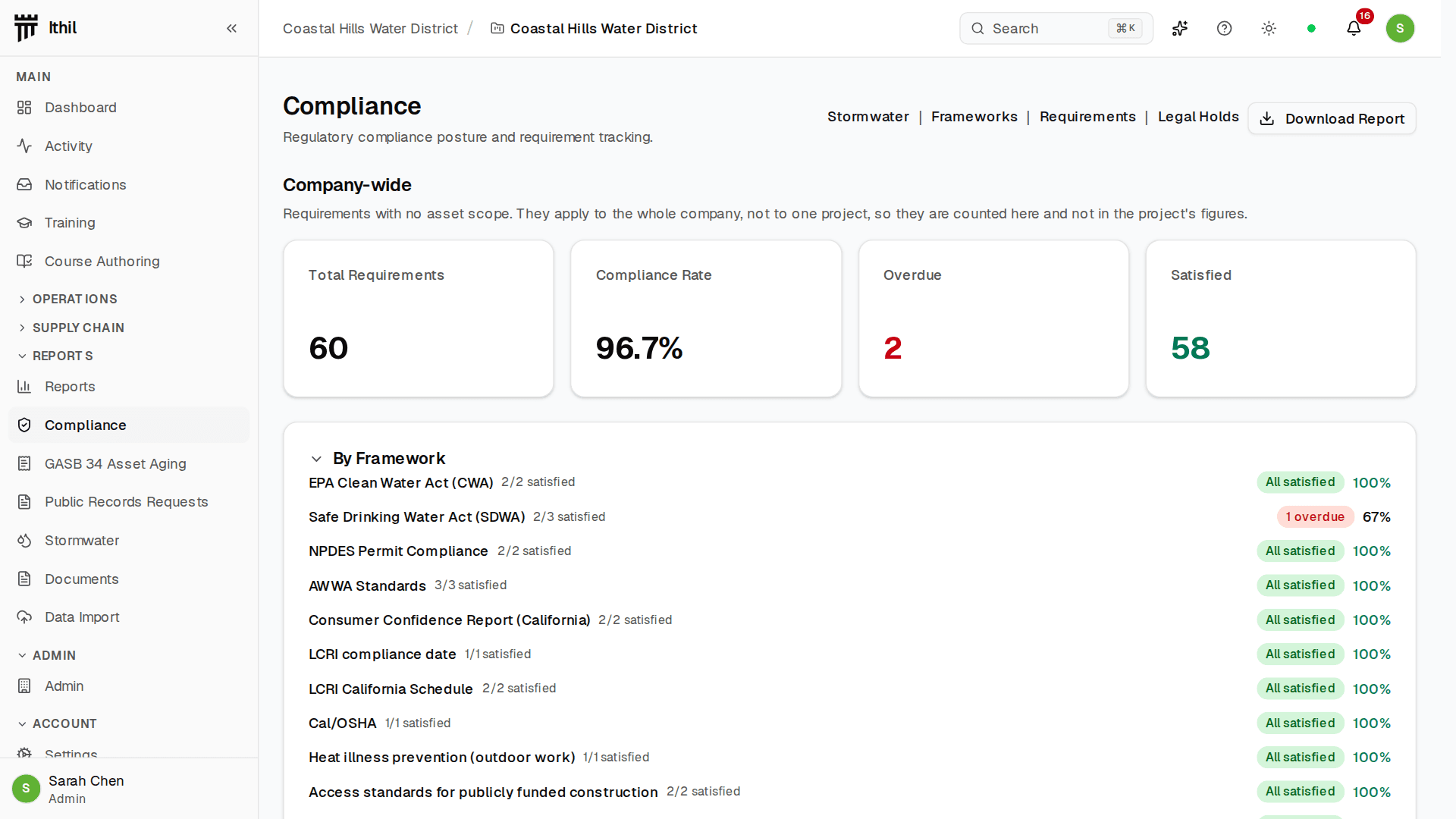
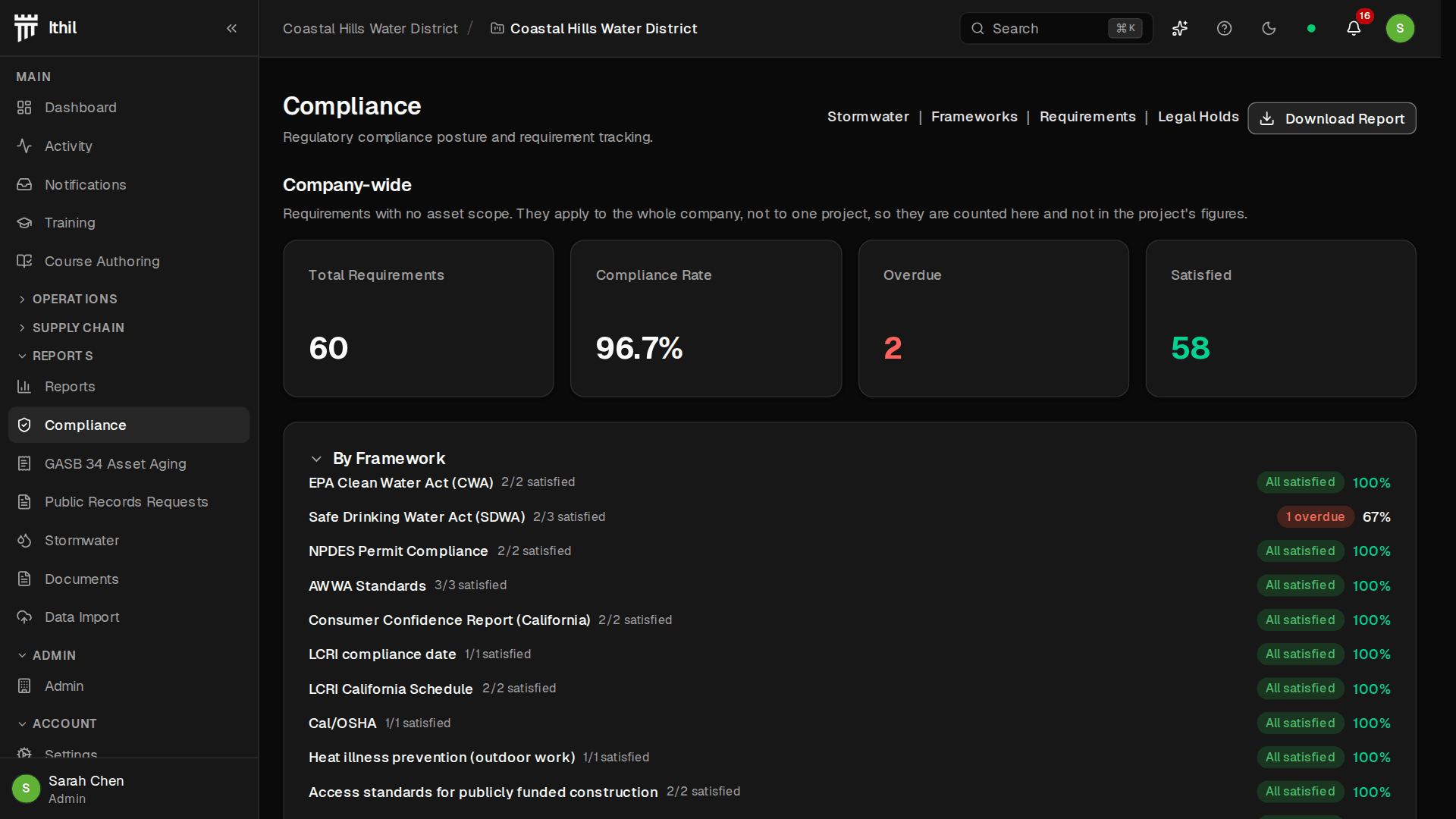
The water and wastewater template brings the Safe Drinking Water Act, the Clean Water Act, NPDES permit compliance, AWWA standards, the Consumer Confidence Report and the Lead and Copper Rule Improvements compliance dates. The posture view shows each framework's progress and which requirement is overdue.
Public notice clocks from the federal rule
A test result over its limit opens the public notice the exceedance owes, with the tier taken from the federal public notification rule, and an E. coli result opens at Tier 1. A Tier 1 notice and the primacy agency consultation are due 24 hours after the system learns of the violation and a Tier 2 notice within 30 days, and repeat notices are dated for as long as the violation persists.
Evidence from the work itself
Requirements link to the water quality tests, inspections and maintenance completions that satisfy them, so the evidence for an audit is the record the crew already made.
Sewer spill reporting and the backflow program have their own pages: sewer spills and backflow.