 Ithil
Water
Distribution
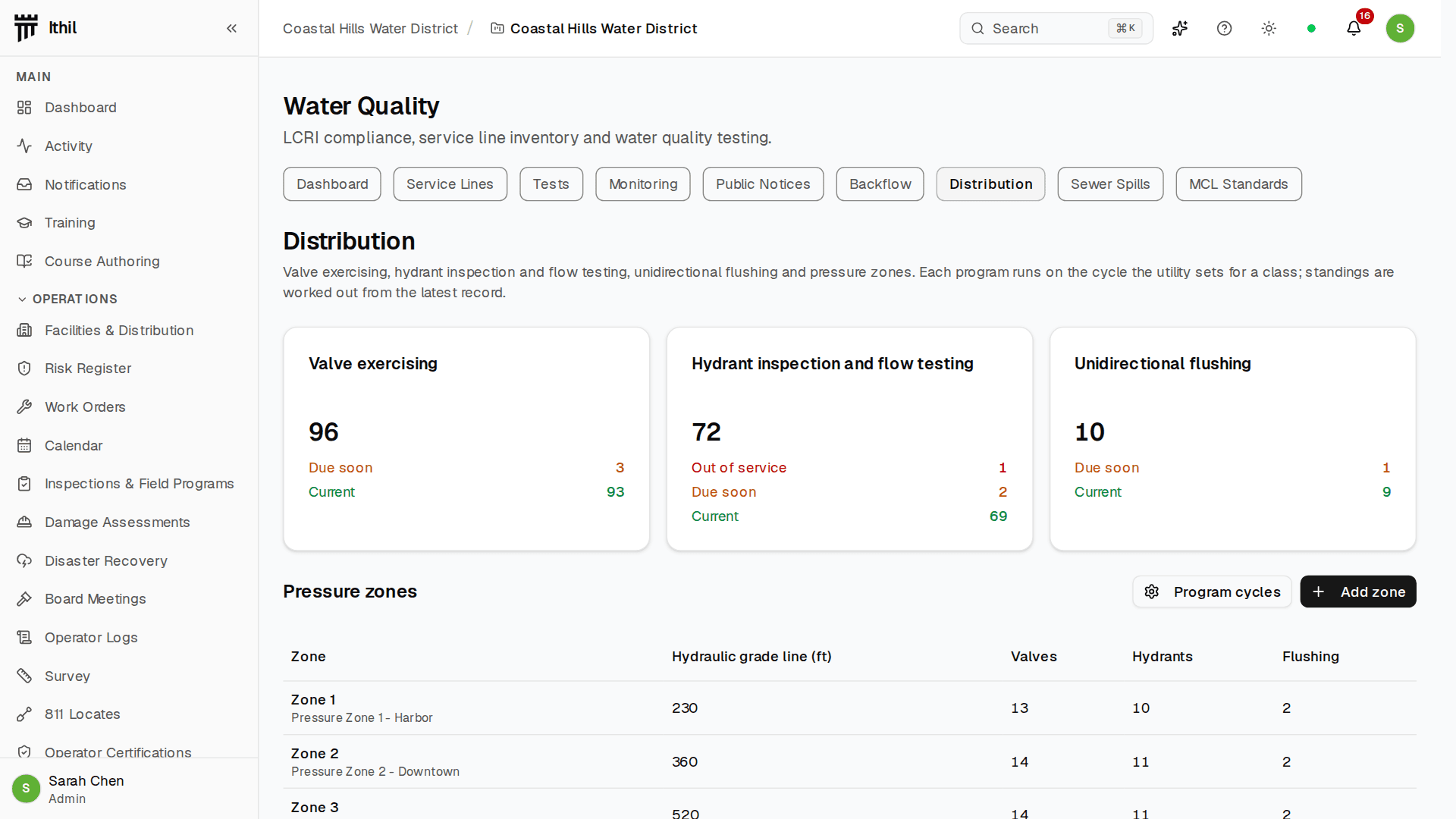
Valve, hydrant and flushing programs with each entry's standing worked out from its latest record, grouped by pressure zone.
Programs on the district's own cycles
Valve exercising, hydrant inspection, hydrant flow testing and unidirectional flushing each run on a cycle in months that the utility sets for a class of asset. Ithil works out each valve, hydrant and route's next due date from its latest record and reads it as current, due soon or overdue.
A hydrant keeps two clocks, one for inspection and one for flow testing, and shows whichever is more pressing. A flushing route counts only its latest completed run.
Repairs become work orders
When an exercise finds a valve inoperable, or a hydrant visit needs repair or leaves the hydrant out of service, a corrective work order opens against that asset. The program shows the asset as inoperable or out of service until a later record says otherwise.
Field records kept as entered
Exercises, hydrant visits and flushing runs are append only. Flow test pressures and the flowing hydrant are stored exactly as the crew recorded them, and a correction is a new record that follows the old one.
Pressure zones and a daily digest
Pressure zones carry their hydraulic grade line and group the valves, hydrants and flushing routes that serve them. A daily check sends one digest per program of the entries that have newly gone overdue.